Sub-Total: £0.00
Stone Age Resources for KS1 & KS2


Featured Resources

Free Resources
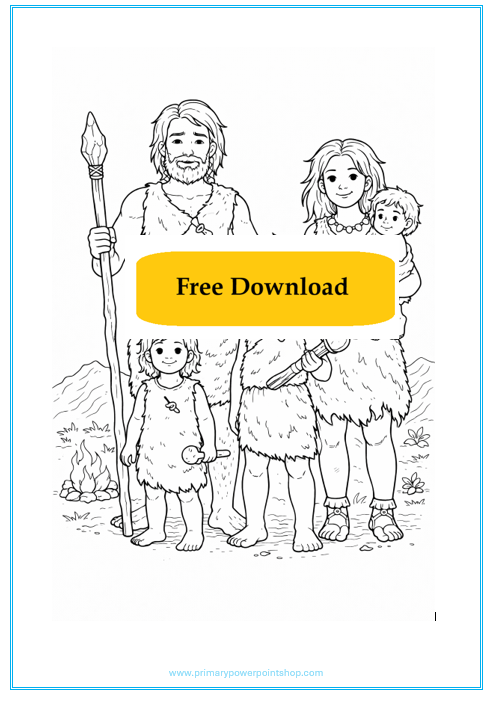
What Was the Stone Age?
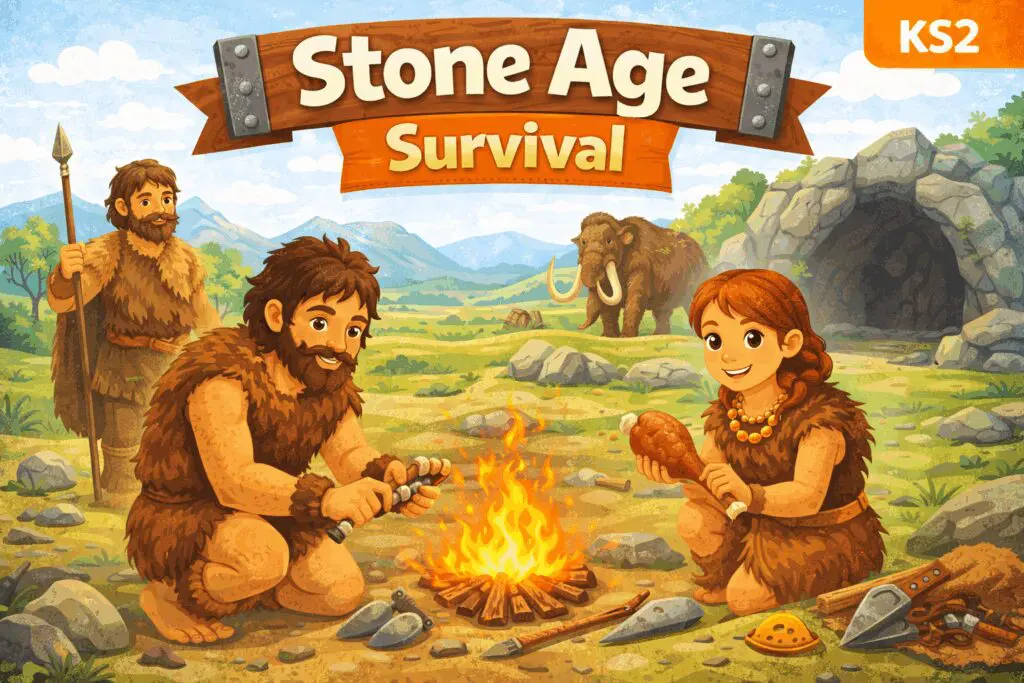
The Stone Age was the earliest period of human history, beginning over 3 million years ago and ending around 4,500 years ago in Britain. During this time, people used tools and weapons made mainly from stone. They lived by hunting animals, gathering wild plants and later began farming and building permanent homes. The Stone Age was the first chapter of human history and laid the foundations for the civilisations that followed.
Hunter-Gatherers
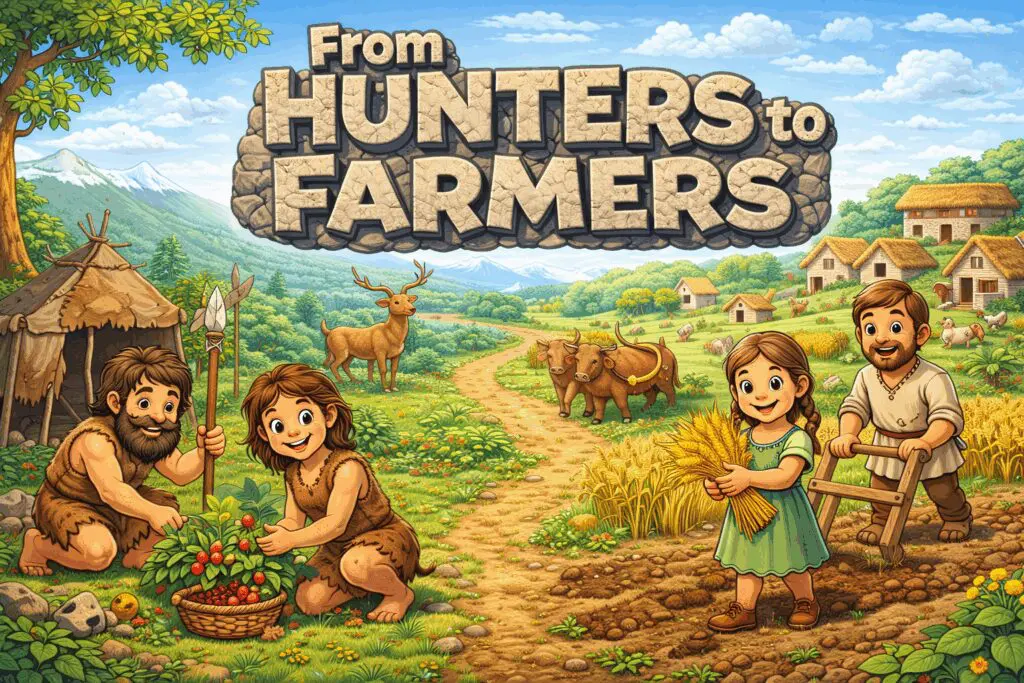
The first people of the Stone Age were hunter-gatherers. They survived by hunting wild animals, catching fish and gathering berries, nuts, fruits and plants for food. Instead of living in one place, they moved from area to area following animals and searching for fresh food and water. Hunter-gatherers used simple stone tools, worked together in small groups and relied on nature for everything they needed.
Stone Age Homes
Stone Age homes changed over time as people learned new skills. Early hunter-gatherers lived in simple shelters made from branches, animal skins and bones that could be moved easily. Later, when people began farming, they built stronger homes from wood, stone and mud and settled in permanent villages. These homes provided protection from the weather and a safe place for families to live and work together.
Stone Tools
Stone Age people made tools from stone, wood, bone and antlers to help them survive. They used sharp stone axes, knives, spearheads and scrapers for hunting animals, preparing food and making clothes. As their skills improved, they created stronger and more useful tools that made everyday life easier. These simple inventions helped people adapt to their environment and laid the foundations for future technology.
Skara Brae
Skara Brae is one of the best-preserved Stone Age villages in Europe. It was built over 5,000 years ago on the Orkney Islands in Scotland and was discovered after a powerful storm uncovered the ancient homes. The stone houses contained furniture such as beds, shelves and cupboards, giving archaeologists an amazing insight into what everyday life was like during the late Stone Age.
Stonehenge
Stonehenge
Stonehenge is one of the world’s most famous prehistoric monuments. It was built in southern England during the late Stone Age and early Bronze Age using enormous standing stones. Archaeologists believe it may have been used for ceremonies, religious gatherings or to mark the movement of the Sun throughout the year, but its exact purpose remains a mystery. Today, Stonehenge helps us learn more about the lives, skills and beliefs of prehistoric people.
Bronze Age
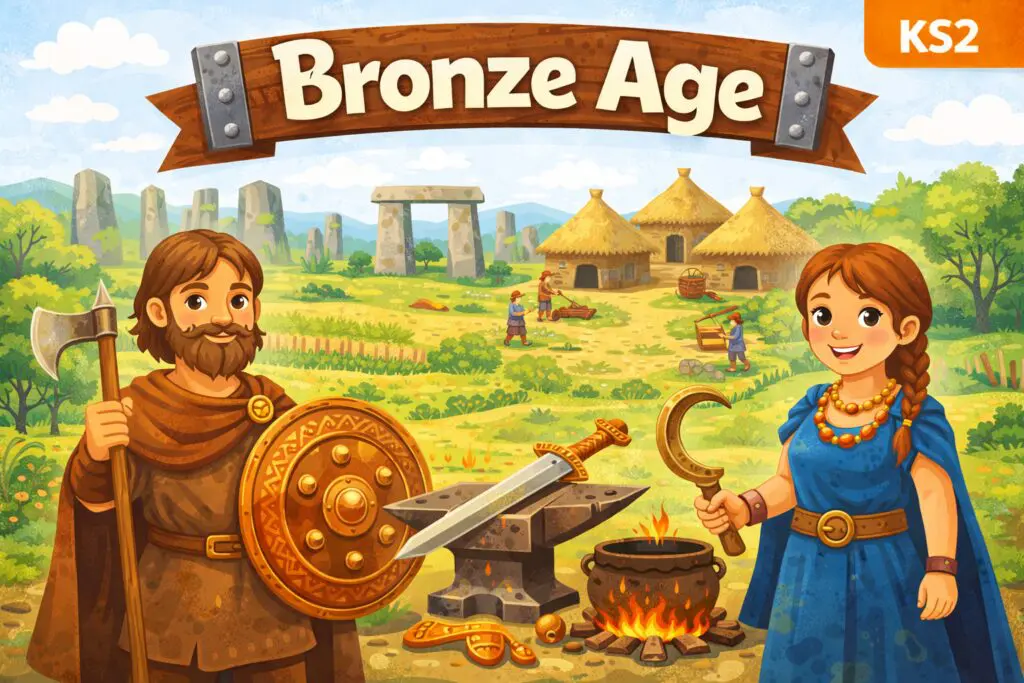
The Bronze Age began when people discovered how to make bronze by mixing copper and tin. Bronze was stronger than stone, allowing people to create better tools, weapons and farming equipment. During this time, people built larger settlements, traded with other communities and developed new skills. The Bronze Age marked an important step forward in human history after the Stone Age.
Iron Age
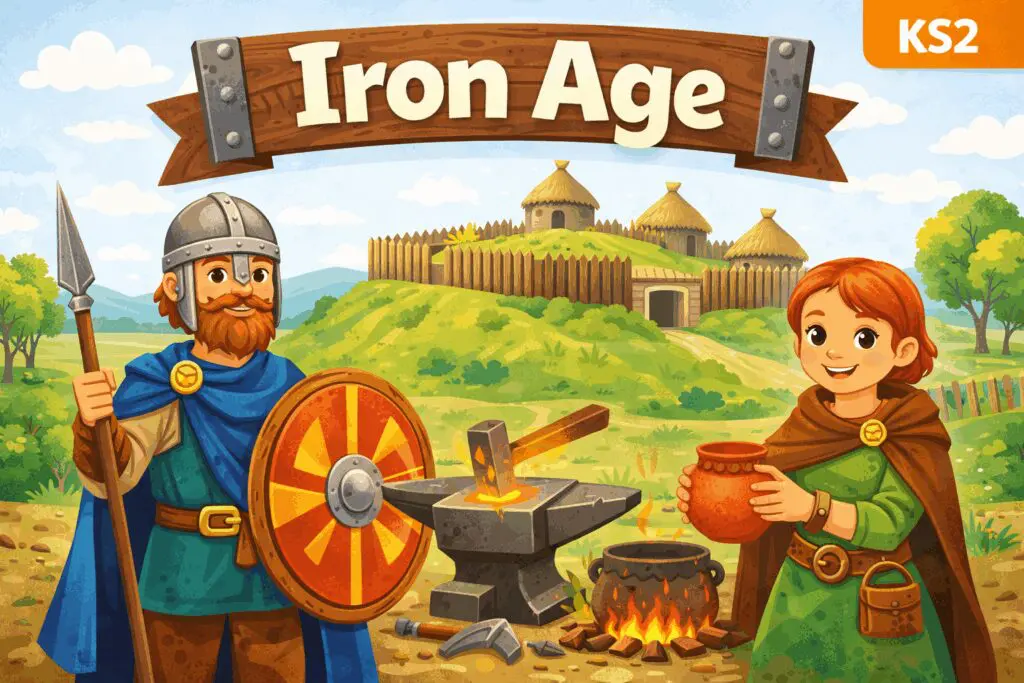
The Iron Age began when people learned how to make tools and weapons from iron, a metal that was stronger and more durable than bronze. This allowed people to improve farming, build stronger communities and defend themselves more effectively. Many people lived in hill forts, and trade between different groups increased. The Iron Age followed the Bronze Age and came to an end in Britain when the Romans invaded in AD 43.
Everyday Life
Everyday life in the Stone Age centred around finding food, making tools and caring for families. People hunted animals, gathered wild plants and, later, grew crops and kept livestock as farming developed. Children learned important survival skills from adults, while families worked together to build shelters, prepare food and make clothing from animal skins. Life was challenging, but cooperation helped Stone Age communities survive and thrive.
Stone Age Animals
The Stone Age was home to many fascinating animals, including woolly mammoths, woolly rhinoceroses, wild horses, giant deer and cave bears. Early people hunted some of these animals for food, clothing and shelter, while others were dangerous predators that had to be avoided. As the climate changed, many of the large Ice Age animals became extinct, while others evolved into species we still see today.
Stone Age Art
Stone Age people created some of the world’s earliest artworks. They painted pictures of animals, people and hunting scenes on cave walls using natural colours made from charcoal, clay and minerals. They also carved small figures from stone, bone and ivory. These artworks help archaeologists learn about how Stone Age people lived, what they believed and the animals they shared their world with.
Fun Stone Age Facts
🦣 Woolly mammoths lived alongside some Stone Age people during the Ice Age.
🪨 The Stone Age lasted for millions of years, making it the longest period in human history.
🏹 Stone Age people made tools from stone, wood, bone and antlers to help them hunt and survive.
🛖 Skara Brae in Scotland is over 5,000 years old and is one of the best-preserved Stone Age villages in the world.
🎨 Stone Age artists painted colourful pictures on cave walls using natural materials such as charcoal, clay and crushed minerals.
🔥 Learning to control fire helped Stone Age people cook food, keep warm and protect themselves from wild animals.
🌾 Towards the end of the Stone Age, people began farming crops and keeping animals instead of moving from place to place.
🗿 Stonehenge was built during the late Stone Age and early Bronze Age, and its exact purpose is still a mystery today.
Why Learn About the Stone Age?
Learning about the Stone Age helps children understand how the first people lived, survived and adapted to their environment. By exploring topics such as hunter-gatherers, early farming, Stonehenge and Skara Brae, pupils discover how human life changed over thousands of years. Studying the Stone Age also develops historical enquiry skills, encouraging children to investigate evidence, compare the past with the present and understand how early innovations shaped the world we live in today.
Discussion Questions
🪨 Why do you think the Stone Age lasted for such a long time?
🏹 Would you rather have been a hunter-gatherer or lived in a farming village? Why?
🛖 What do you think would have been the hardest part of living in the Stone Age?
🗿 Why do you think people built monuments like Stonehenge?
🦣 If you could visit the Stone Age for one day, what would you most like to see or do?
Related Resources
Stone Age Timeline
⬇️
⬇️
⬇️
⬇️
Related Resources