Sub-Total: £0.00
Romans Resources for KS1 & KS2

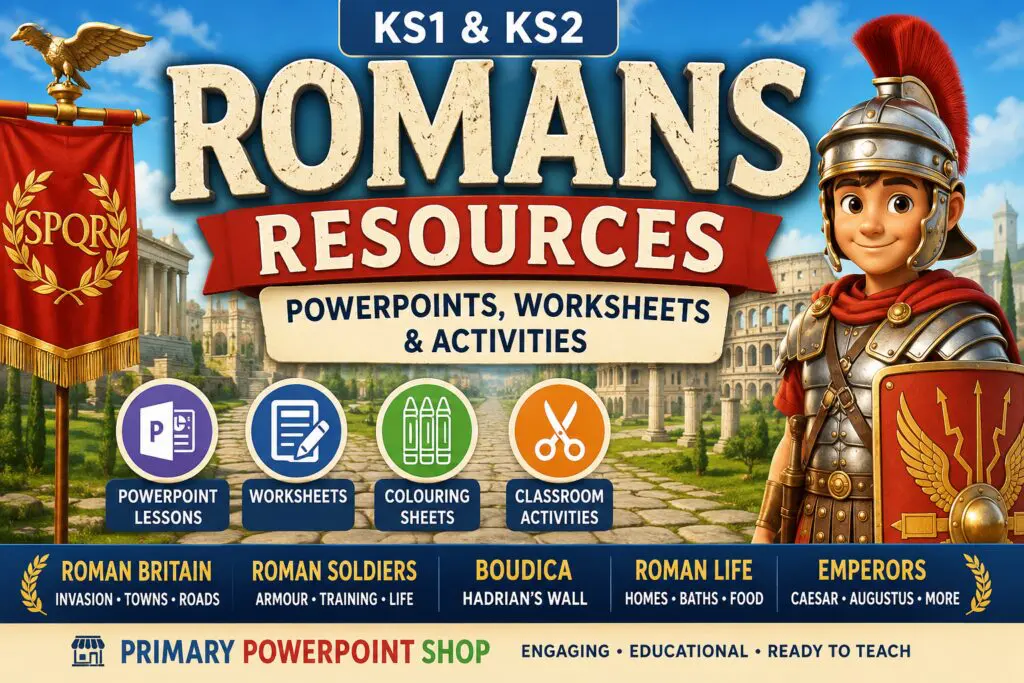
Welcome to our collection of Roman resources for KS1 and KS2. Explore engaging PowerPoint lessons, printable worksheets, colouring sheets and classroom activities that help children discover the fascinating world of Ancient Rome. From powerful emperors and Roman soldiers to life in Roman Britain, these resources bring history to life while supporting the primary curriculum.
Featured Resources
Everything You Need to Teach the Roman Britain Topic with Confidence.
Free Resources
What Was Ancient Rome?
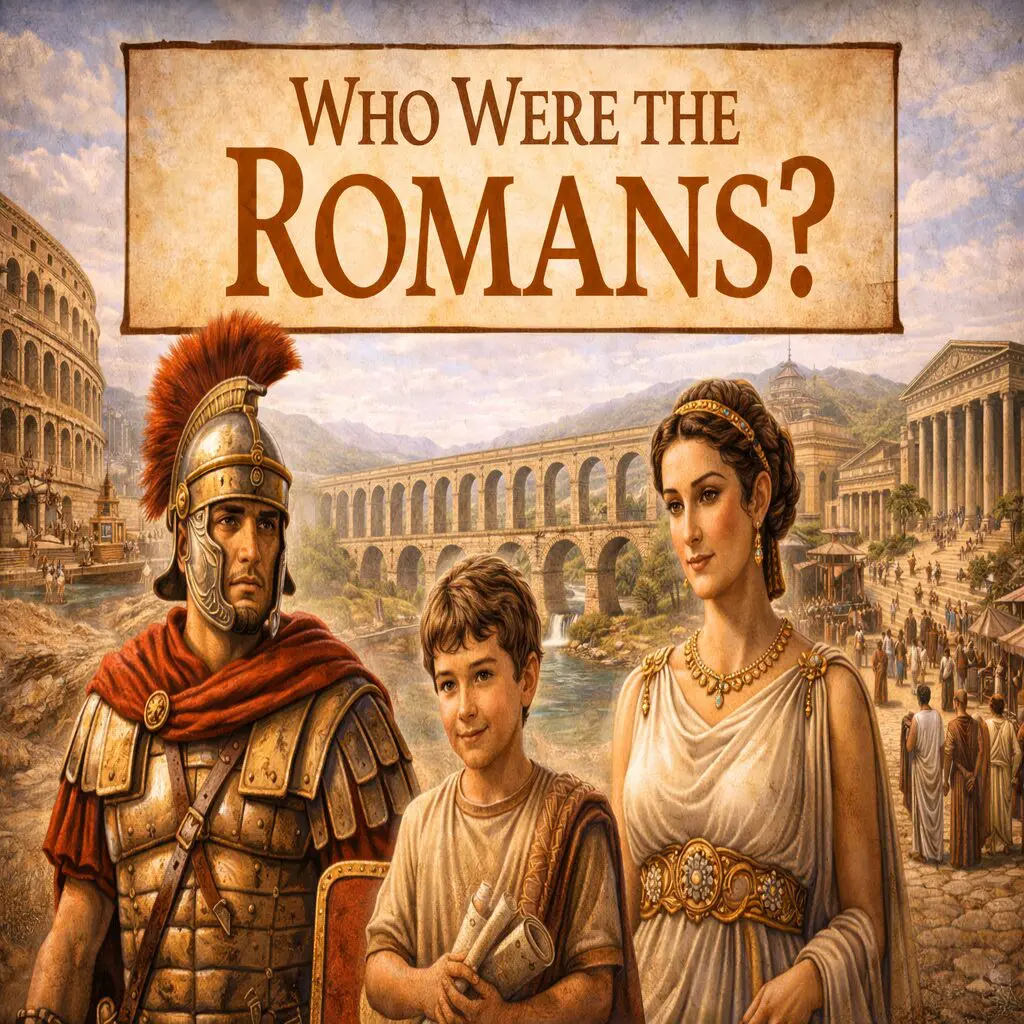
Ancient Rome was one of the greatest civilisations in history. Beginning as a small city over 2,700 years ago, it grew into a vast empire that stretched across Europe, North Africa and parts of Asia. The Romans were famous for their powerful army, impressive buildings, roads and inventions. They also brought many changes to Britain, leaving behind forts, towns, baths and roads that can still be seen today.
Roman Britain
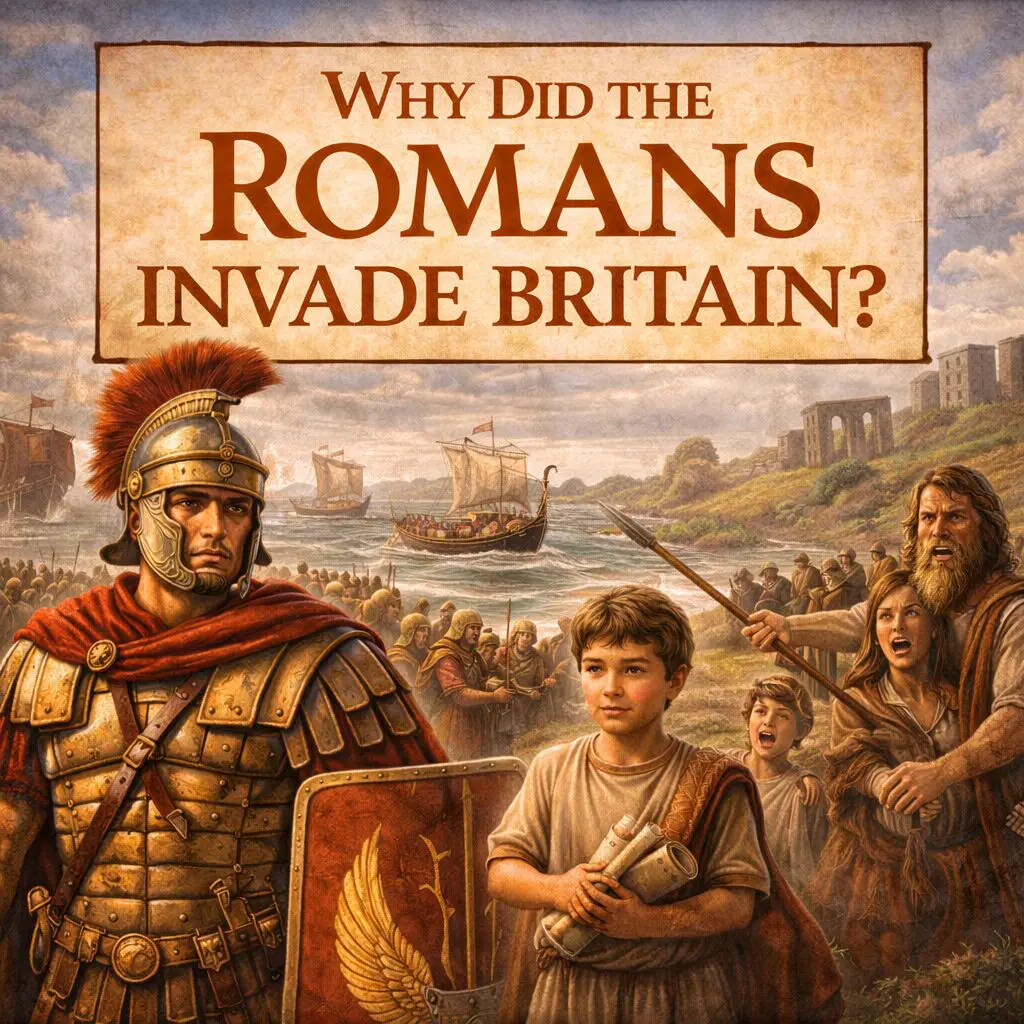
In AD 43, the Romans invaded Britain under the command of Emperor Claudius. Their powerful army defeated many local tribes and gradually took control of much of the country. The Romans built forts, roads and towns to strengthen their rule, bringing new ideas, technology and ways of life that changed Britain forever.
Roman Soldiers
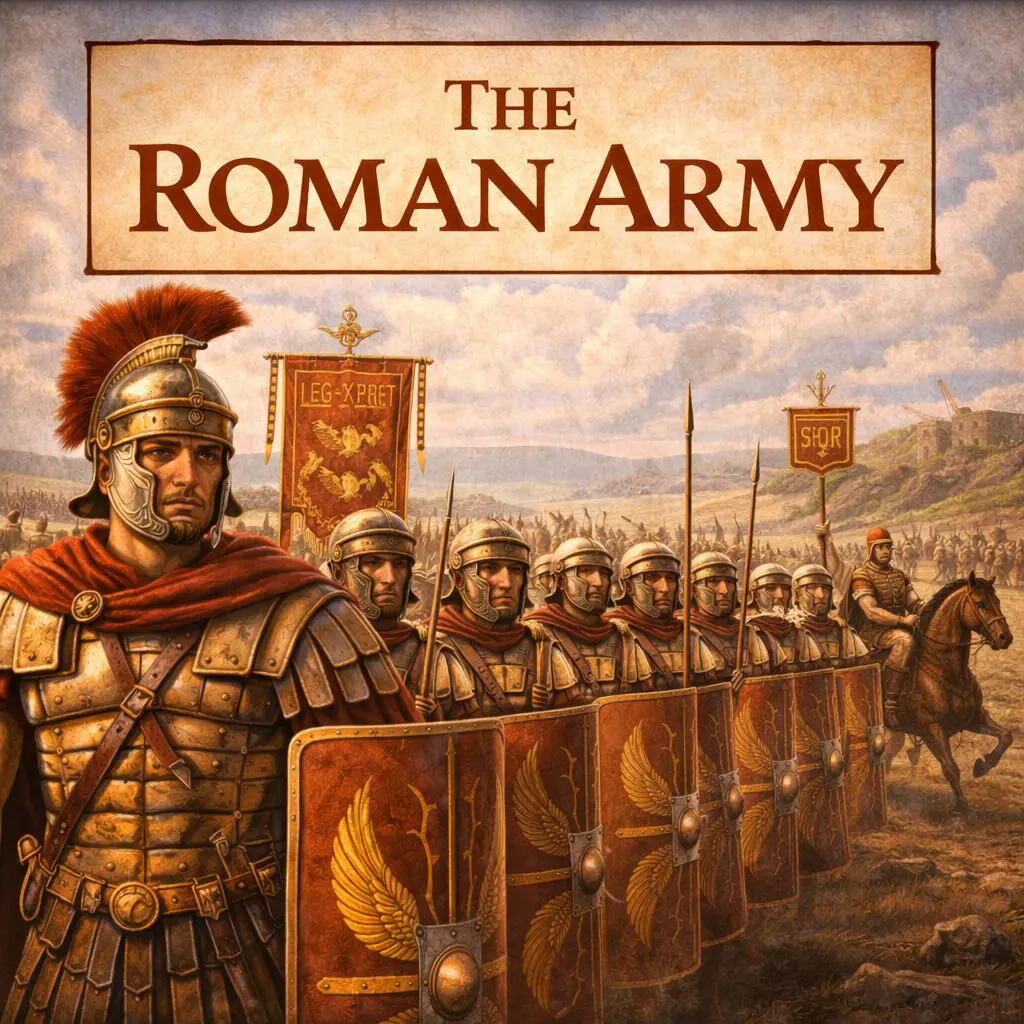
Roman soldiers were among the best-trained fighters in the ancient world. They wore strong armour, carried large shields and fought with short swords called gladii. Roman soldiers worked together in disciplined formations, helping them win many battles and protect the vast Roman Empire. They also built roads, forts and walls wherever they travelled.
Roman Emperors
Roman emperors were the powerful rulers of the Roman Empire. They made important decisions, led armies and helped the empire grow. Some emperors, such as Claudius, expanded the empire by invading Britain, while others, like Hadrian, built famous structures including Hadrian’s Wall. Some emperors were wise leaders, while others were remembered for making poor decisions.
Roman Buildings
The Romans were skilled builders who created impressive towns, temples, villas, baths and amphitheatres across their empire. They used strong materials such as stone and concrete to build structures that were designed to last. Many Roman buildings can still be seen today, showing the incredible engineering skills of this ancient civilisation.
Roman Roads
The Romans built thousands of miles of strong, straight roads to help soldiers, traders and travellers move quickly across the empire. These roads connected towns, forts and cities, making it easier to transport goods and communicate. Many Roman roads were so well built that parts of them are still used today.
Life in Ancient Rome
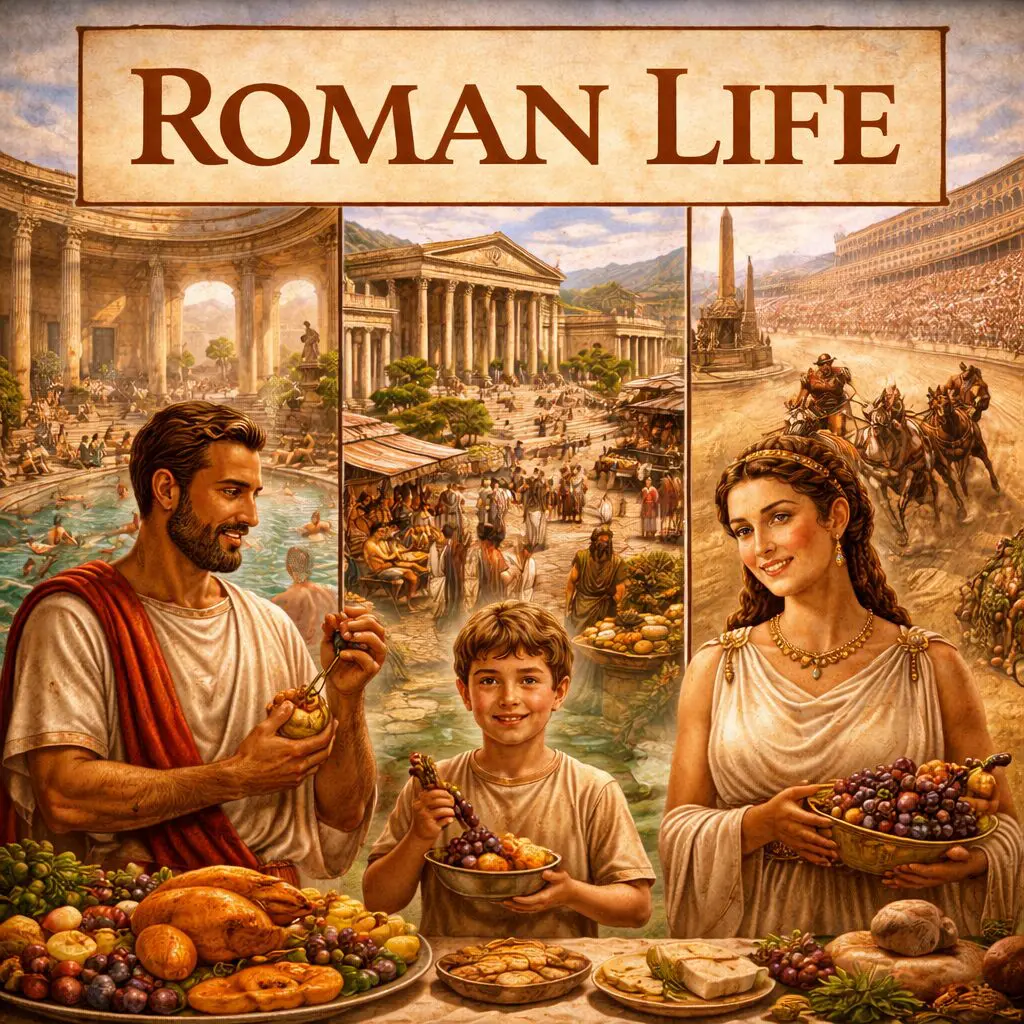
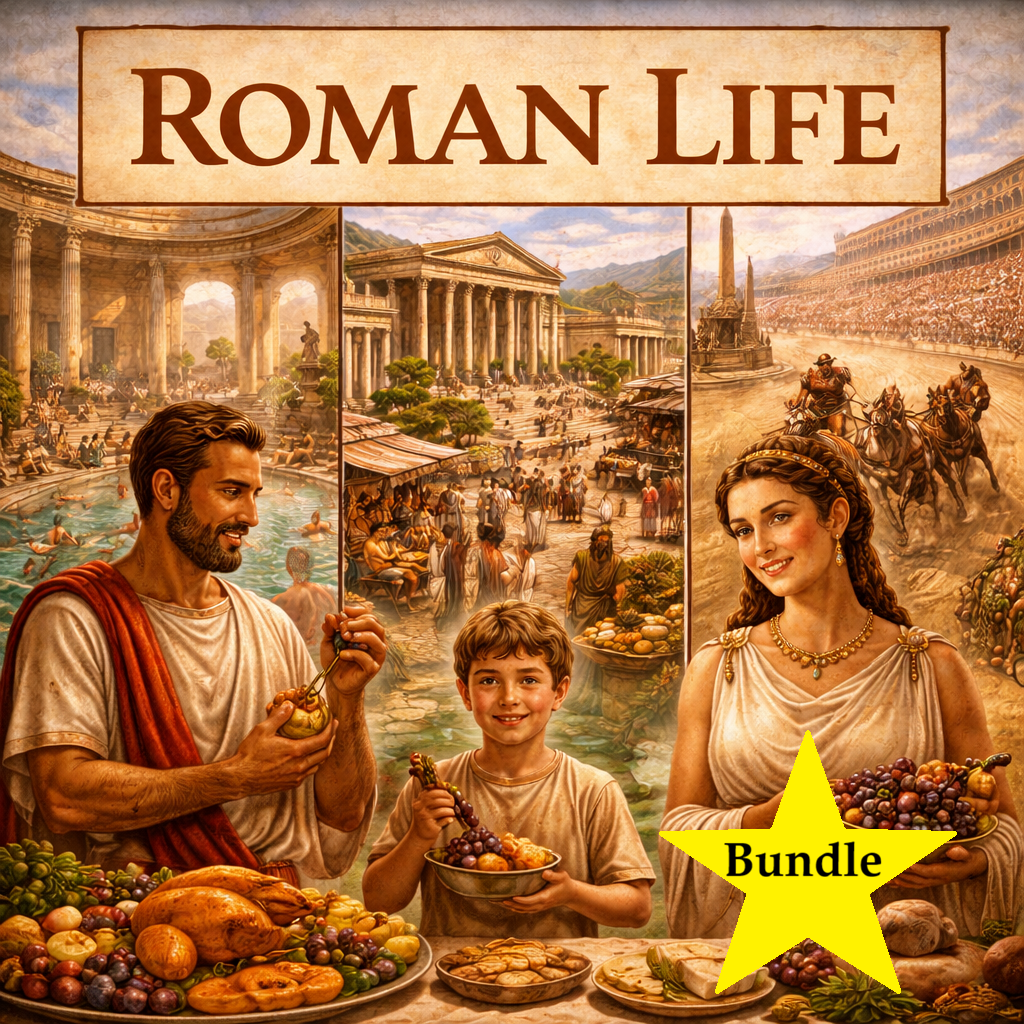
Daily life in Ancient Rome was very different depending on whether people were rich or poor. Many Romans lived in busy towns and cities, while others worked on farms in the countryside. Children went to school, families visited markets and baths, and people enjoyed entertainment such as chariot races and gladiator contests. Roman life helped shape many of the traditions and ideas that still influence us today.
Boudica
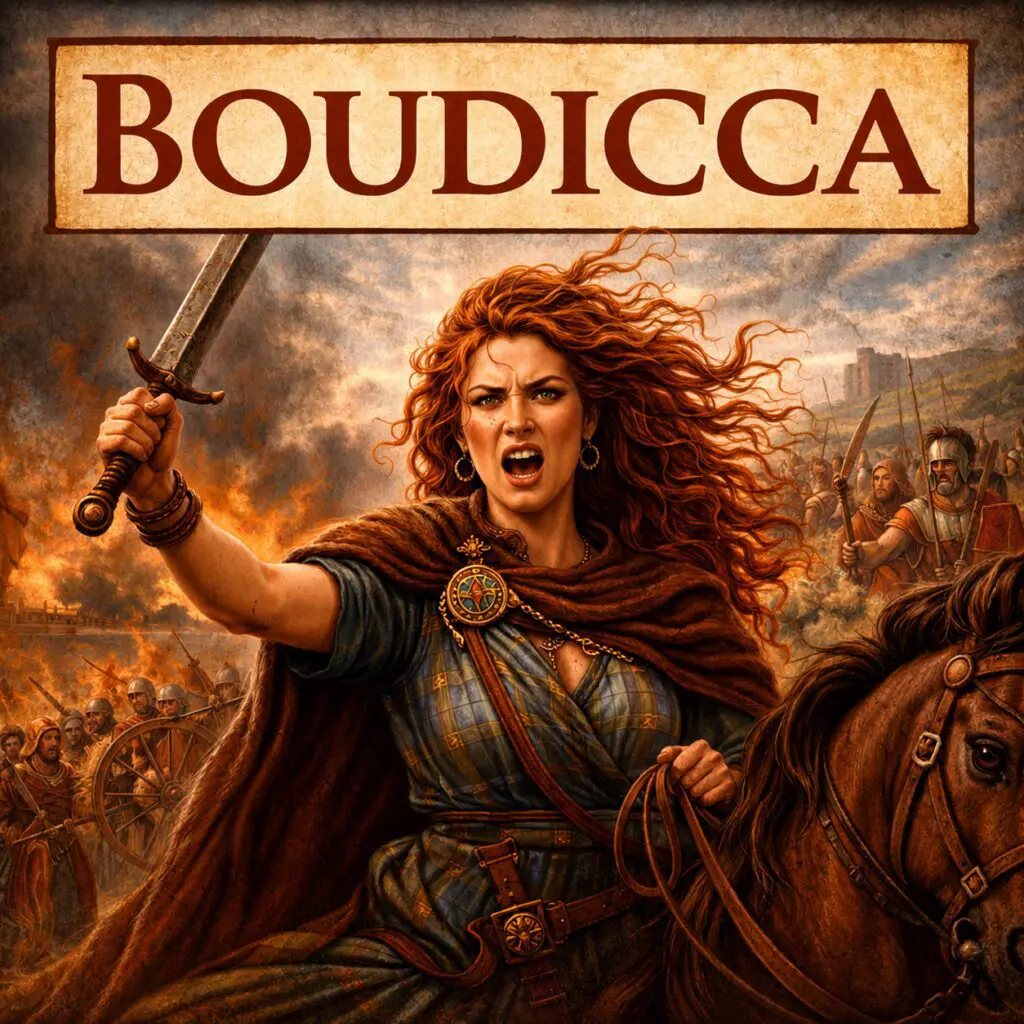
Boudicca was the brave queen of the Iceni tribe who led a rebellion against the Romans in AD 60–61. Angry at the way her people had been treated, she united several British tribes to fight against Roman rule. Although the Romans eventually defeated her army, Boudicca is remembered as a courageous leader who stood up for her people and remains one of Britain’s most famous historical figures.
Hadrian’s Wall
Hadrian’s Wall was built by the Romans across the north of Britain around AD 122 during the reign of Emperor Hadrian. Stretching for around 73 miles (117 kilometres), it helped protect the Roman Empire from attacks by tribes living further north. The wall included forts, watchtowers and gates, and parts of it can still be visited today.
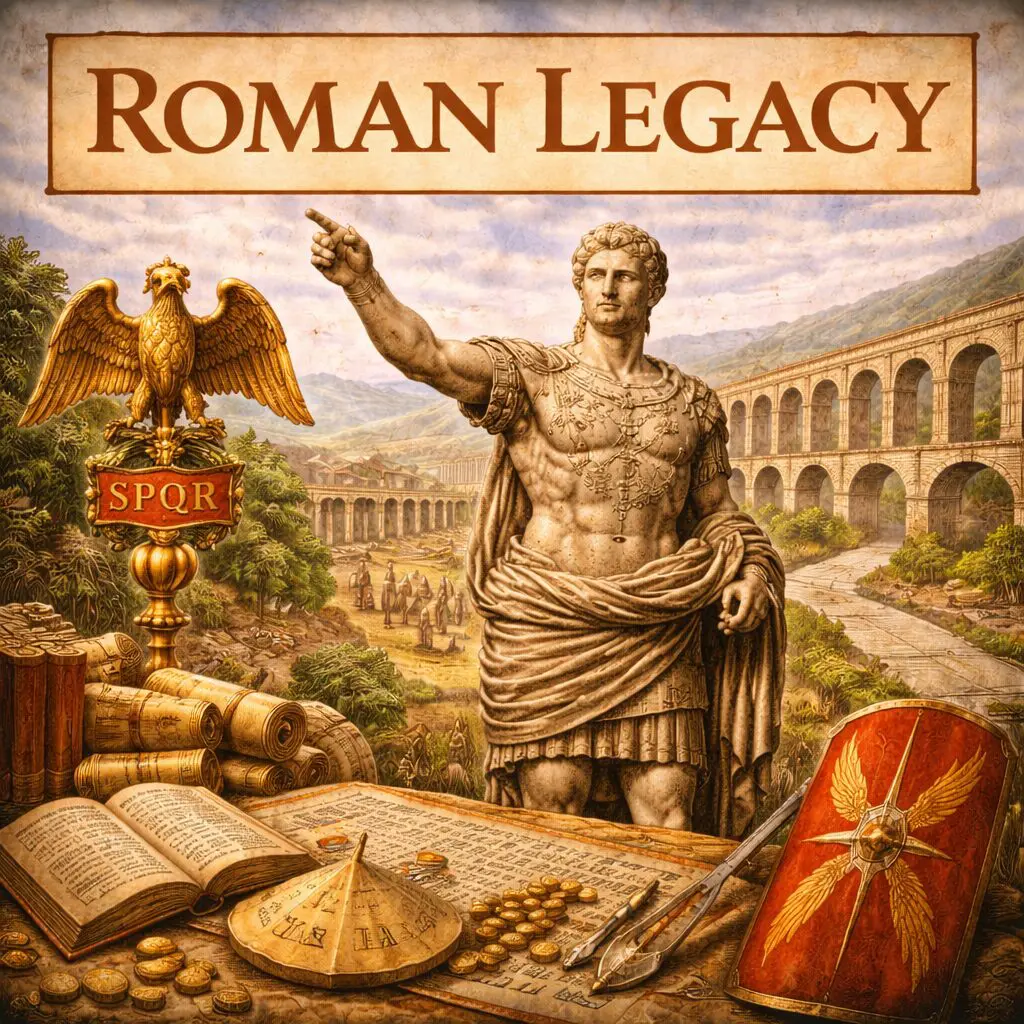
The Romans left a lasting legacy that can still be seen today. They built strong roads, bridges and towns, introduced new ways of building and helped shape laws and government. Many English words have Latin roots, the language spoken by the Romans. By learning about their legacy, children can see how ideas from Ancient Rome continue to influence our everyday lives.
Fun Roman Facts
🏛 Ancient Rome was founded over 2,700 years ago, according to legend.
⚔ Roman soldiers could march up to 20 miles (32 km) in a single day while carrying heavy equipment.
🛣 The Romans built over 250,000 miles (400,000 km) of roads across their empire.
🛁 Public baths were an important part of Roman daily life, where people could wash, exercise and socialise.
🏟 The Colosseum in Rome could hold around 50,000 spectators who watched gladiator contests and other events.
🏰 Parts of Hadrian’s Wall can still be visited in northern England today.
🦅 Roman soldiers carried special eagle standards, which were symbols of pride and strength for each legion.
🏺 Many Roman inventions and ideas, including roads, laws and aqueducts, still influence our lives today.
Why Learn About Romans?
Learning about the Romans helps children understand how one of the world’s greatest civilisations shaped Britain and influenced the way we live today. By exploring Roman Britain, pupils discover how the Romans introduced new roads, towns, buildings and ideas that changed everyday life. Studying the Romans also develops historical enquiry skills, encouraging children to investigate evidence, compare the past with the present and understand how ancient events continue to affect the modern world.
Discussion Questions
- Would you like to be a Roman soldier?
- Why did the Romans build roads?
- Why was Boudica important?
- Which Roman invention do you think was the most useful?
- Would you rather live in Roman Britain or today?
Related Resources