Sub-Total: £0.00
Habitat Resources for KS1 & KS2 | PowerPoints, Worksheets & Activities

🌍 Amazing Habitat Fact
Did you know that a single fallen log can be home to hundreds of different living things? Tiny insects, fungi, worms, beetles and spiders all depend on this small habitat for food and shelter. Habitats can be enormous like oceans or as small as the underside of a rock!
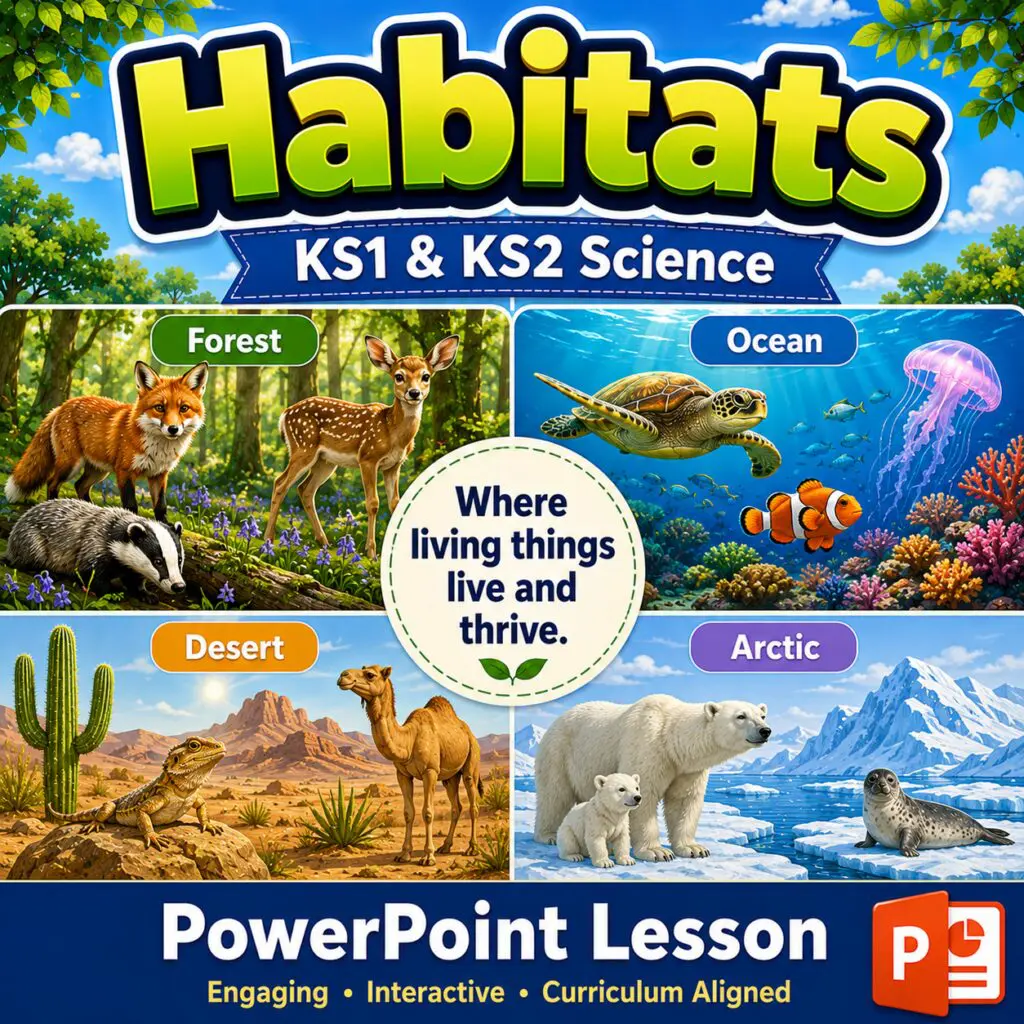
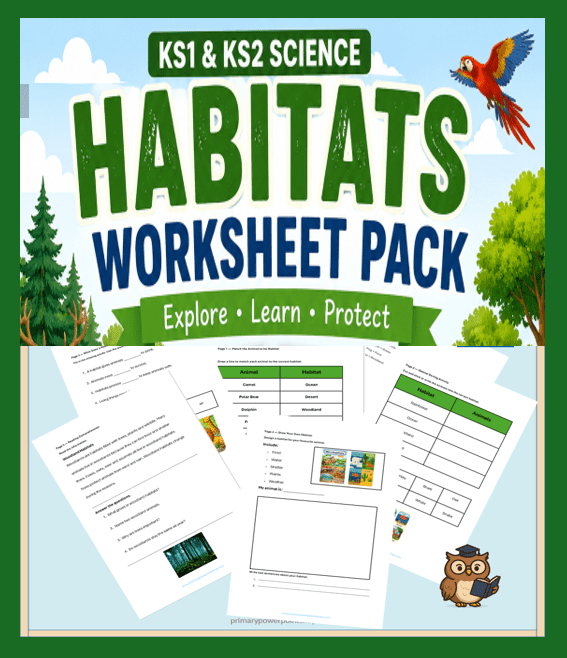
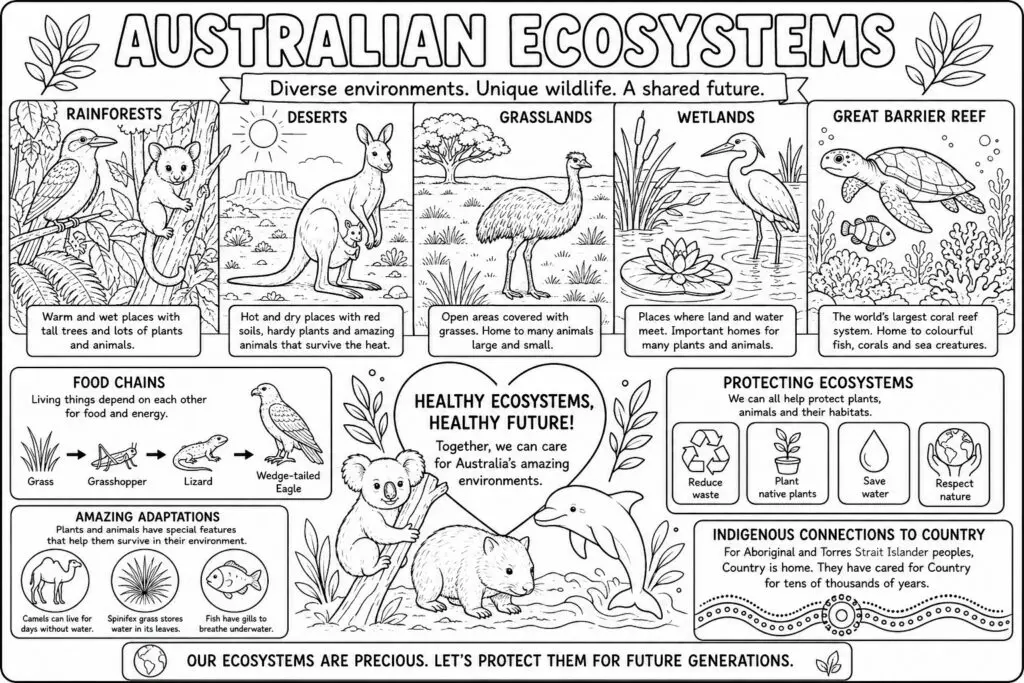
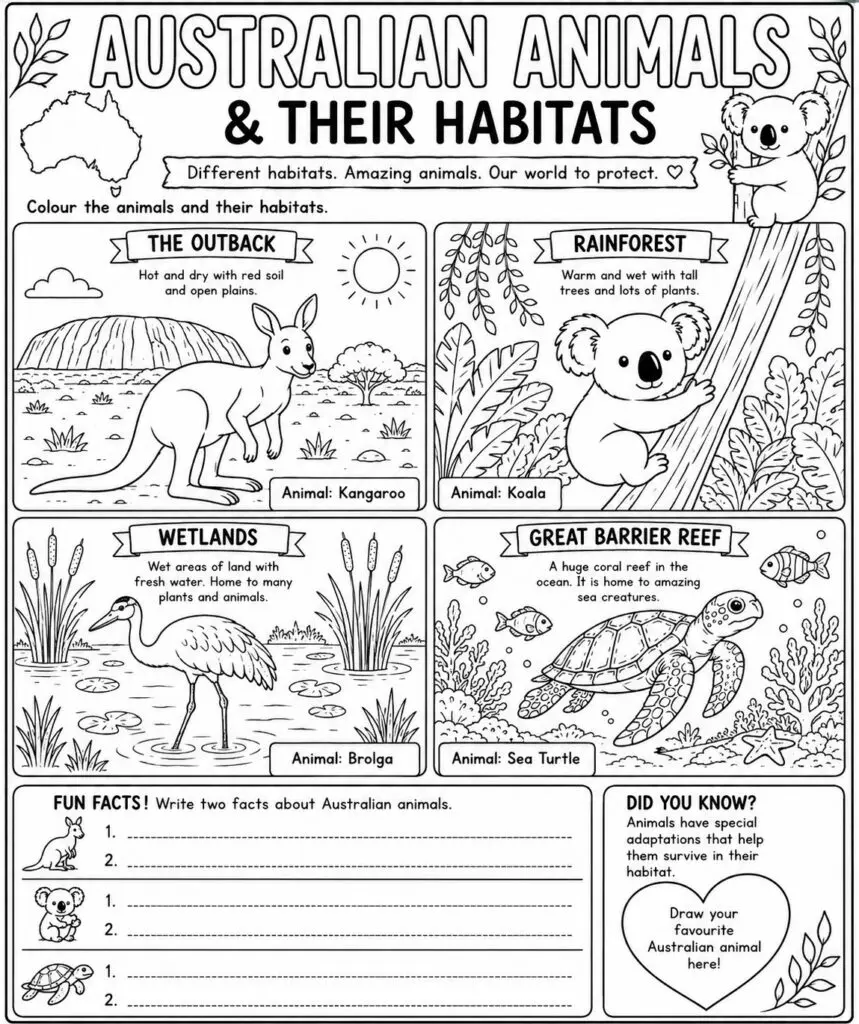

A habitat is the natural home or environment where a plant, animal or other living thing lives. It provides everything a living organism needs to survive, including food, water, shelter and space. Different plants and animals are suited to different habitats depending on their needs. Habitats can be found all over the world and include woodlands, oceans, deserts, grasslands, rainforests, polar regions and ponds. Even small places such as under a rock, inside a log or in a garden can be habitats for tiny living things. Every habitat is unique and supports a variety of plants and animals that depend on one another to survive.
There are many different habitats around the world, each with its own climate, plants and animals. Some habitats are hot and dry, while others are cold, wet or covered in water. Animals and plants have adapted to survive in the conditions of their habitat. Some of the world’s main habitats include woodlands, rainforests, deserts, grasslands, oceans, rivers, ponds, wetlands and polar regions. Each habitat provides the food, water, shelter and space that living things need to survive. By exploring different habitats, children can discover the amazing variety of life found across our planet and understand how every habitat plays an important role in supporting biodiversity.
Woodland habitats are areas where many trees grow together, providing homes for a wide variety of plants, animals and fungi. They are rich in food and shelter, making them one of the most diverse habitats in the world. Trees provide nesting places for birds, while the forest floor is home to insects, worms, hedgehogs, foxes, squirrels and many other creatures. Fallen leaves and decaying wood help plants grow and provide food for fungi and tiny organisms. Woodland habitats change with the seasons, offering different colours, foods and wildlife throughout the year. They are important for supporting biodiversity, producing oxygen and helping to protect the environment.
Ocean habitats cover more than 70% of the Earth’s surface and are home to an incredible variety of plants and animals. From shallow coastal waters to the deepest parts of the ocean, each area provides different conditions for living things. Ocean habitats are home to creatures such as fish, dolphins, whales, sharks, sea turtles, octopuses, crabs and colourful coral reef animals. Seaweeds and other marine plants provide food, oxygen and shelter for many species. Every ocean habitat forms part of a complex ecosystem where living things depend on one another for survival. Protecting our oceans from pollution and climate change is essential to help marine life thrive for future generations.
Desert habitats are some of the hottest and driest places on Earth, receiving very little rainfall each year. Despite the harsh conditions, many plants and animals have adapted to survive with limited water and extreme temperatures. Desert plants, such as cacti, store water in their stems, while animals including camels, lizards, snakes, fennec foxes and scorpions have special features that help them stay cool and conserve water. Many desert animals are most active at night when temperatures are lower. Although deserts may appear empty, they are home to a surprising variety of life and are important ecosystems that support many unique species.
Polar habitats are the coldest places on Earth and are found around the Arctic in the north and Antarctica in the south. These icy environments have long, freezing winters and very short summers, making survival a challenge for plants and animals. Animals such as polar bears, penguins, seals, Arctic foxes and whales have special adaptations, including thick fur, layers of fat called blubber and waterproof feathers, to help them stay warm. Although few plants can grow in these extreme conditions, mosses, lichens and small flowering plants can survive during the short summer. Polar habitats play a vital role in regulating the Earth’s climate and are home to some of the world’s most remarkable wildlife.
A microhabitat is a very small habitat found within a larger habitat. Although tiny, microhabitats provide everything small plants and animals need to survive, including food, water, shelter and protection. Common microhabitats include under rocks, inside rotting logs, beneath fallen leaves, in ponds, under tree bark and within hedgerows. These places are home to creatures such as woodlice, worms, spiders, beetles, slugs, snails, ants and centipedes. Exploring microhabitats helps children discover that even the smallest environments are full of life and shows how every living thing plays an important role in maintaining a healthy ecosystem.
Adaptations are special features or behaviours that help plants and animals survive in their habitats. These adaptations allow living things to find food, stay safe from predators, cope with different weather conditions and reproduce successfully. For example, polar bears have thick fur and a layer of blubber to keep warm in icy habitats, while camels store fat in their humps to help them survive in hot deserts. Some animals use camouflage to blend into their surroundings, while others have sharp claws, strong beaks or excellent eyesight to help them hunt or find food. Plants also have adaptations, such as deep roots to reach water or waxy leaves to reduce water loss. Every living thing has adaptations that help it thrive in the environment where it lives.
A food chain shows how energy passes from one living thing to another within a habitat. It usually begins with a plant, called a producer, which uses sunlight to make its own food. Herbivores, known as primary consumers, eat the plants, while carnivores and omnivores eat other animals higher up the food chain. At the end of the chain, decomposers such as fungi, bacteria and worms break down dead plants and animals, returning nutrients to the soil to help new plants grow. Every plant and animal has an important role, and if one part of a food chain is disrupted, it can affect the entire habitat.
Habitats around the world are under threat from pollution, deforestation, climate change, urban development and the loss of natural spaces. When habitats are damaged or destroyed, the plants and animals that depend on them may struggle to survive. People can help protect habitats by recycling, reducing waste, planting trees, saving water, reducing pollution and protecting wildlife. Nature reserves, national parks and conservation projects also play an important role in preserving habitats for future generations. By caring for habitats, we help protect biodiversity and ensure that plants and animals continue to thrive across our planet.
🌍 There are millions of different habitats on Earth, from huge oceans to tiny spaces under rocks.
🌊 The ocean is the largest habitat on our planet and covers more than 70% of the Earth’s surface.
🍂 A single rotting log can be home to hundreds of tiny living things, including insects, fungi and worms.
🐫 Camels can survive for days without drinking water because of their amazing adaptations to desert habitats.
🐧 Penguins live in some of the coldest habitats on Earth and huddle together to keep warm.
🦊 Some animals use camouflage to blend into their surroundings, making it harder for predators to spot them.
🌳 Ancient trees can provide homes for birds, insects, bats, squirrels and many other animals all at the same time.
🐠 Coral reefs are often called the “rainforests of the sea” because they support such a huge variety of marine life.
🦋 Even a school garden can be an important habitat for bees, butterflies, birds and other wildlife.
🌱 Every habitat, no matter how big or small, is important because it helps support the incredible biodiversity of our planet.
What is a habitat, and why is it important for living things?
How do different habitats provide food, water, shelter and space for plants and animals?
What adaptations help animals survive in habitats such as deserts, oceans or polar regions?
Why are microhabitats important, even though they are very small? How are food chains connected to habitats?
What might happen if a habitat is damaged or destroyed?
Which habitat would you most like to explore, and what plants or animals would you hope to see there?
How do humans affect habitats, both positively and negatively?
What can we do at home or at school to help protect habitats and wildlife?
Why is it important to protect habitats and the biodiversity they support for future generations?
Learning about habitats helps children understand how plants and animals depend on their environments to survive. By exploring different habitats, food chains and adaptations, pupils discover how living things are connected and why every species plays an important role in maintaining healthy ecosystems. Studying habitats also develops scientific skills such as observation, investigation and critical thinking while encouraging children to care for the natural world. Understanding how human activities affect habitats inspires young learners to protect wildlife, conserve natural environments and help create a more sustainable future.
Around 3.5 billion years ago – The first simple living organisms appear in Earth’s oceans, beginning the story of life on our planet.
Around 470 million years ago – The first plants begin growing on land, creating new habitats for other living things.
Around 400 million years ago – The first forests develop, providing food and shelter for a wide variety of animals.
Around 230 million years ago – Dinosaurs begin living in many different habitats, including forests, deserts and coastal regions.
Around 66 million years ago – The extinction of the dinosaurs allows mammals to spread and adapt to a wide range of habitats.
Thousands of years ago – Humans begin changing habitats by farming, building settlements and clearing land for agriculture.
1872 – Yellowstone National Park becomes the world’s first national park, helping to protect important habitats and wildlife.
1961 – The World Wildlife Fund (WWF) is founded to help conserve habitats and protect endangered species around the world.
Today – Scientists, conservationists and communities work together to protect habitats, restore ecosystems and help plants and animals survive for future generations.