Sub-Total: £0.00
Ancient Greece Resources for KS1 & KS2 | PowerPoints, Worksheets & Activities

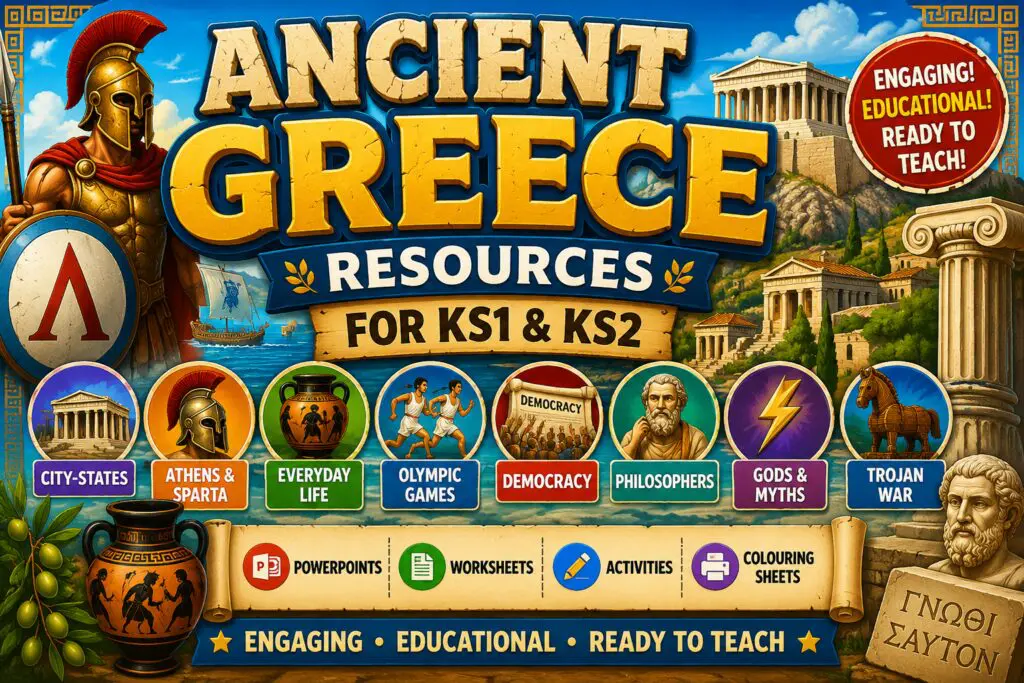
Ancient Greece was one of the world’s most influential civilisations, shaping ideas that continue to affect our lives today. From democracy and philosophy to the Olympic Games and mythology, our Ancient Greece resources help KS1 and KS2 pupils explore this fascinating period through engaging PowerPoint lessons, printable worksheets and classroom activities.
🌎 Amazing Greece Fact
Did you know that many ideas we still use today, including democracy, theatre, the Olympic Games and philosophy, began in Ancient Greece over 2,500 years ago? The achievements of the Ancient Greeks continue to influence our lives every day.
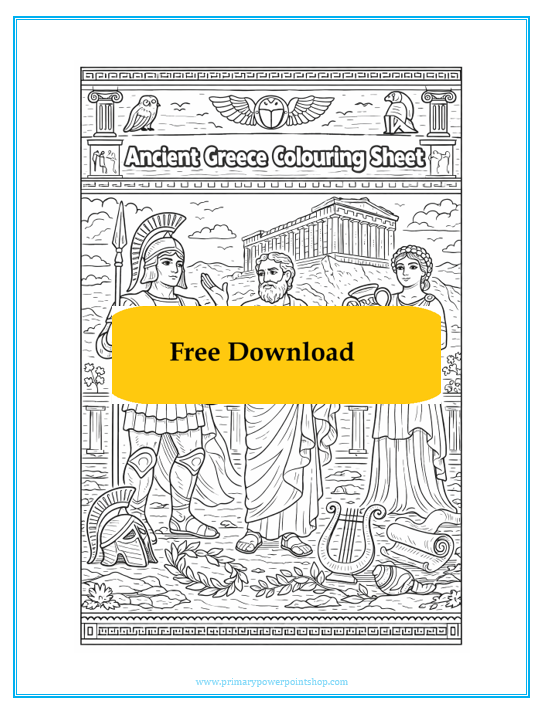
🏛️ What Was Ancient Greece?
Ancient Greece was one of the world’s most influential civilisations, developing around 3,000 years ago in south-eastern Europe. It was made up of many independent city-states, including Athens and Sparta, each with its own government and way of life. The Ancient Greeks made remarkable achievements in democracy, philosophy, science, mathematics, art and architecture, many of which continue to influence the modern world. Their stories, inventions and ideas have shaped history and are still studied in schools today.
📍 Where Was Ancient Greece?
Ancient Greece was located in south-eastern Europe, on the southern end of the Balkan Peninsula, surrounded by the Aegean Sea, Ionian Sea and Mediterranean Sea. It included the Greek mainland, hundreds of islands and parts of the western coast of modern-day Turkey. The mountainous landscape meant that many communities developed as independent city-states, such as Athens, Sparta, Corinth and Thebes, each with its own government and traditions. The surrounding seas made travelling, trading and exploring easier, helping Ancient Greece become one of the most influential civilisations in history.
🏙️ Greek City-States
Unlike many ancient civilisations, Ancient Greece was not one united country. Instead, it was made up of many independent city-states, known as poleis, each with its own government, laws, army and way of life. Some of the most famous city-states were Athens, Sparta, Corinth and Thebes. Although they shared the same language, religion and culture, the city-states often competed with one another and sometimes fought wars. Their independence encouraged new ideas, trade and innovation, helping Ancient Greece become one of the most influential civilisations in history.
🛡️ Athens and Sparta
Athens and Sparta were the two most powerful city-states in Ancient Greece, but they were very different from one another. Athens was famous for its ideas about democracy, learning, art and philosophy. Many Athenians took part in government, and the city became a centre for education, theatre and culture. Sparta, on the other hand, was known for its strong military tradition. Boys began training to become soldiers from a young age, and the Spartan army was one of the most feared in the ancient world. Although Athens and Sparta often competed and even fought against each other, both played an important role in shaping the history and achievements of Ancient Greece.
🏺 Everyday Life
Everyday life in Ancient Greece depended on where people lived and whether they were rich or poor. Most people worked as farmers, fishermen, craftsmen or traders, while women usually managed the home and cared for the family. Children learned important skills from a young age, although boys were more likely to receive a formal education than girls. People enjoyed festivals, music, theatre and sporting events, especially the Olympic Games. Families often lived in simple stone or mud-brick houses, and daily life was centred around the home, the marketplace and the local community.
👨🌾 Farming, Trade and Food
Farming and trade were essential to life in Ancient Greece. Farmers grew crops such as olives, grapes, wheat and barley, while also keeping sheep, goats and chickens. Because much of Greece was mountainous and difficult to farm, the Ancient Greeks relied on trade to obtain goods they could not produce themselves. Merchants travelled across the Mediterranean Sea, exchanging products such as olive oil, pottery and wine for metals, timber and other valuable goods. The Ancient Greek diet was simple but healthy, with bread, olives, fruit, vegetables, fish and cheese being everyday foods, while meat was usually eaten only on special occasions or during religious festivals.
⚔️ The Greek Army
The Ancient Greek army was made up of well-trained citizen soldiers who fought to protect their city-states. The most famous soldiers were called hoplites, who wore bronze helmets, carried large round shields and fought with long spears and short swords. Hoplites stood side by side in a tight formation known as the phalanx, creating a strong defensive wall of shields and spears that was difficult for enemies to break through. While many Greek city-states had powerful armies, Sparta was especially famous for its highly disciplined soldiers, who trained from childhood and became some of the finest warriors in the ancient world.
🏆 The Olympic Games
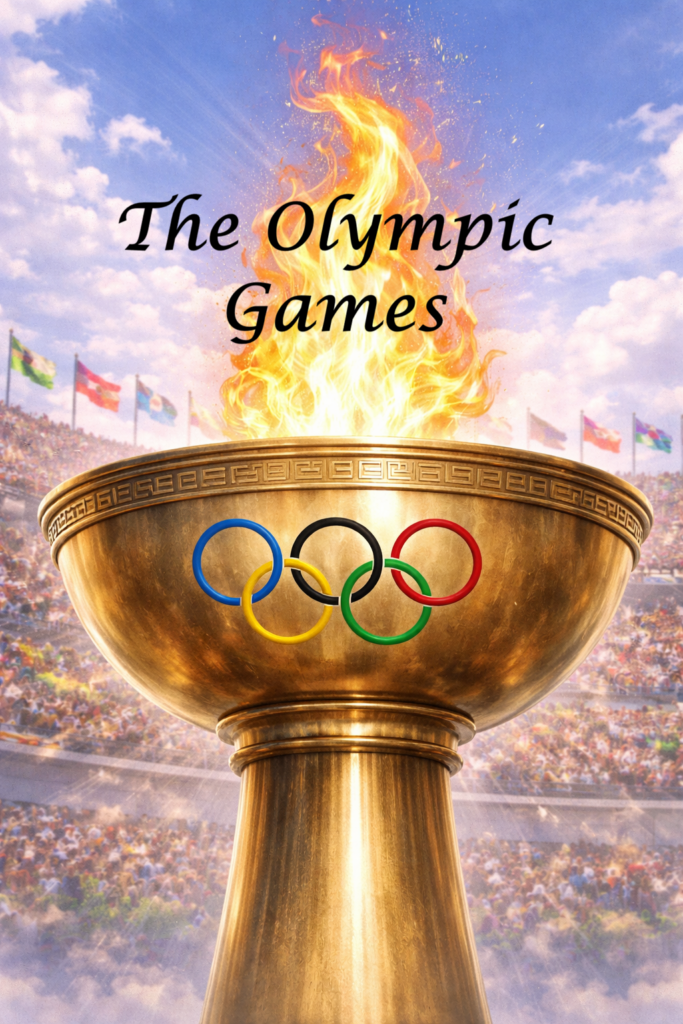
The Olympic Games began in 776 BC in the city of Olympia and were held every four years to honour Zeus, the king of the Greek gods. Athletes from different Greek city-states travelled to compete in events such as running, wrestling, boxing, chariot racing and the discus throw. During the Games, a special Olympic Truce was declared so that competitors and spectators could travel safely without fear of war. Winners did not receive gold medals but were awarded a simple olive wreath, earning great honour and respect for themselves and their city-state. The Ancient Olympic Games inspired the modern Olympic Games that continue to bring athletes together from around the world today.
🏛️ Democracy
One of Ancient Greece’s greatest achievements was the development of democracy, a system of government in which citizens could help make important decisions. Democracy first developed in Athens around 508 BC, where eligible male citizens met to discuss laws, vote on important issues and choose leaders. Although women, enslaved people and foreigners were not allowed to vote, this was one of the earliest examples of people taking part in government rather than being ruled by a king. The ideas of democracy developed in Ancient Greece have influenced many modern governments around the world today.
📚 Famous Greek Philosophers
Ancient Greece was home to some of the greatest thinkers in history, known as philosophers. They asked important questions about life, knowledge, justice and the world around them. Three of the most famous philosophers were Socrates, who encouraged people to think carefully by asking thoughtful questions; Plato, who founded one of the world’s first schools, called the Academy; and Aristotle, who studied subjects such as science, mathematics, politics.
⚡ Greek Gods and Mythology
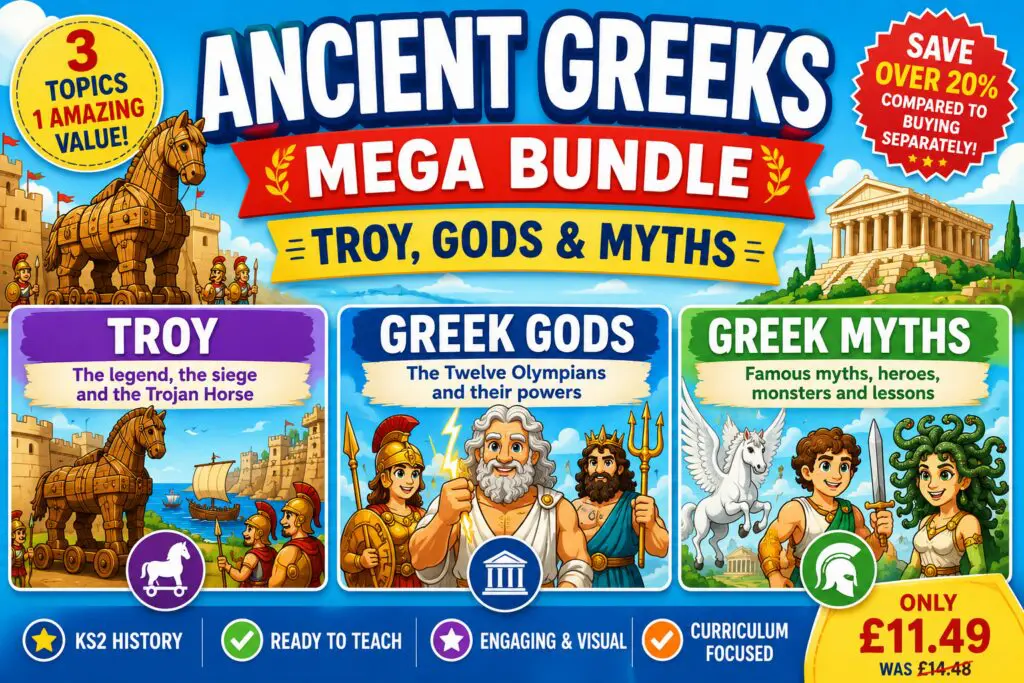
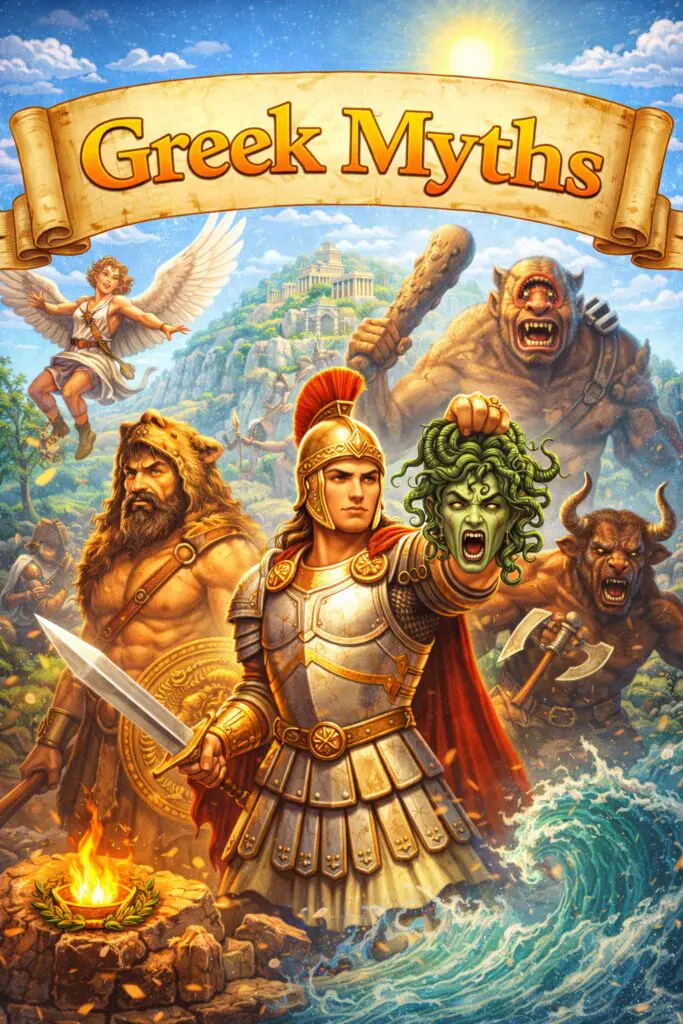
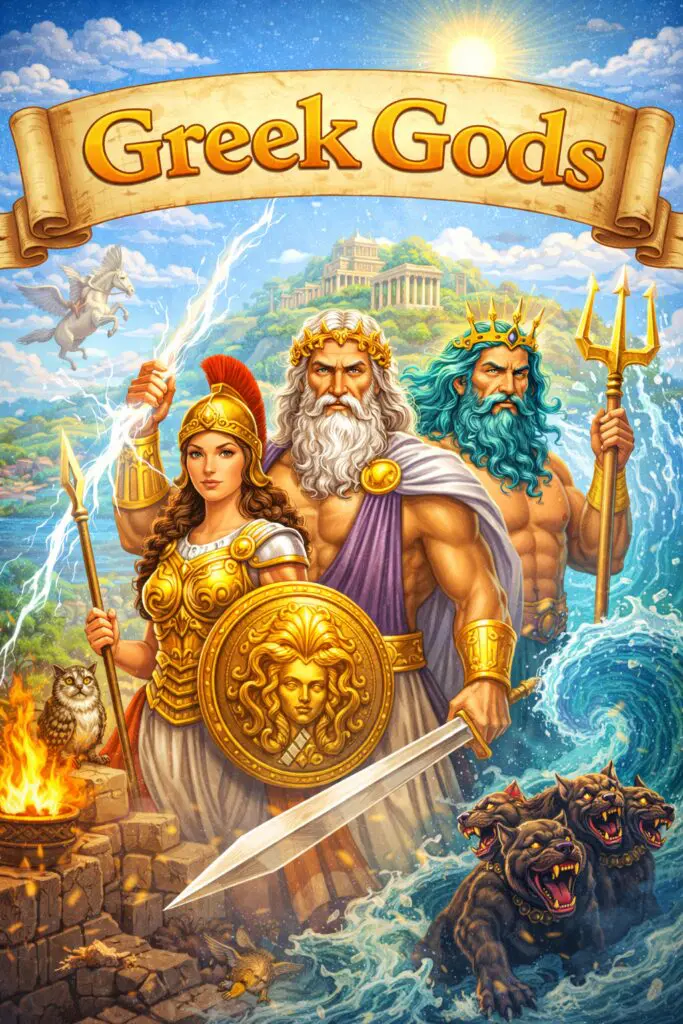
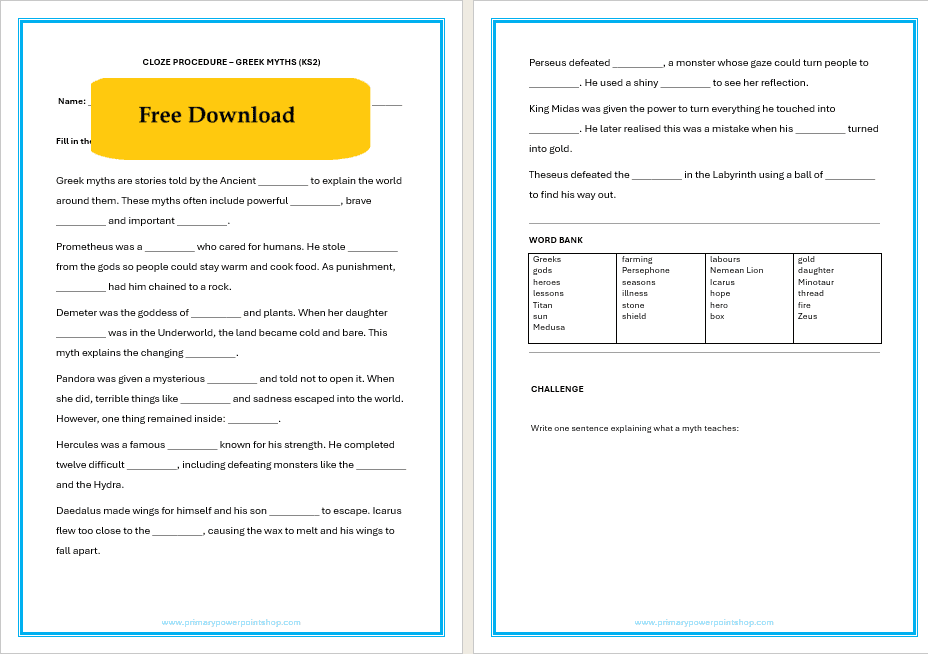
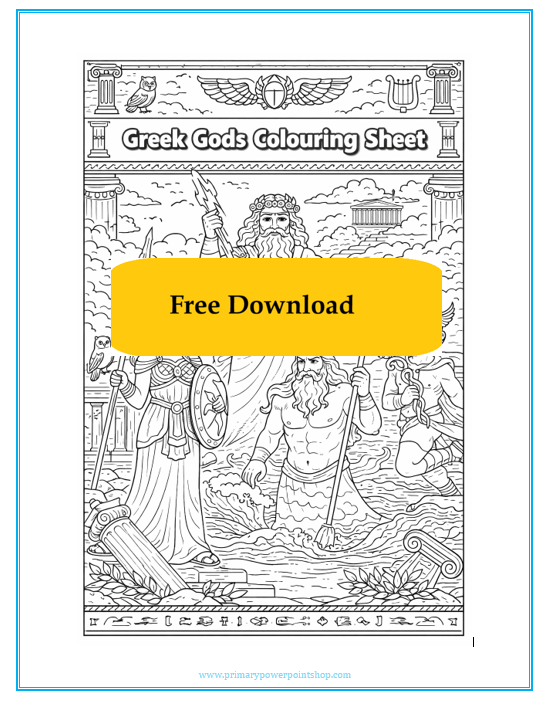
The Ancient Greeks believed in many gods and goddesses who they thought controlled different parts of the world and influenced everyday life. They worshipped powerful gods such as Zeus, the king of the gods, Athena, the goddess of wisdom, Poseidon, the god of the sea, and Hades, the ruler of the Underworld. The Greeks told exciting myths and legends to explain natural events, teach important lessons and entertain people. These stories featured heroes, monsters and magical creatures, including Heracles, Perseus, the Minotaur and Medusa. Greek mythology has inspired books, films, art and literature for thousands of years and continues to fascinate people around the world today.
🐴 The Trojan War
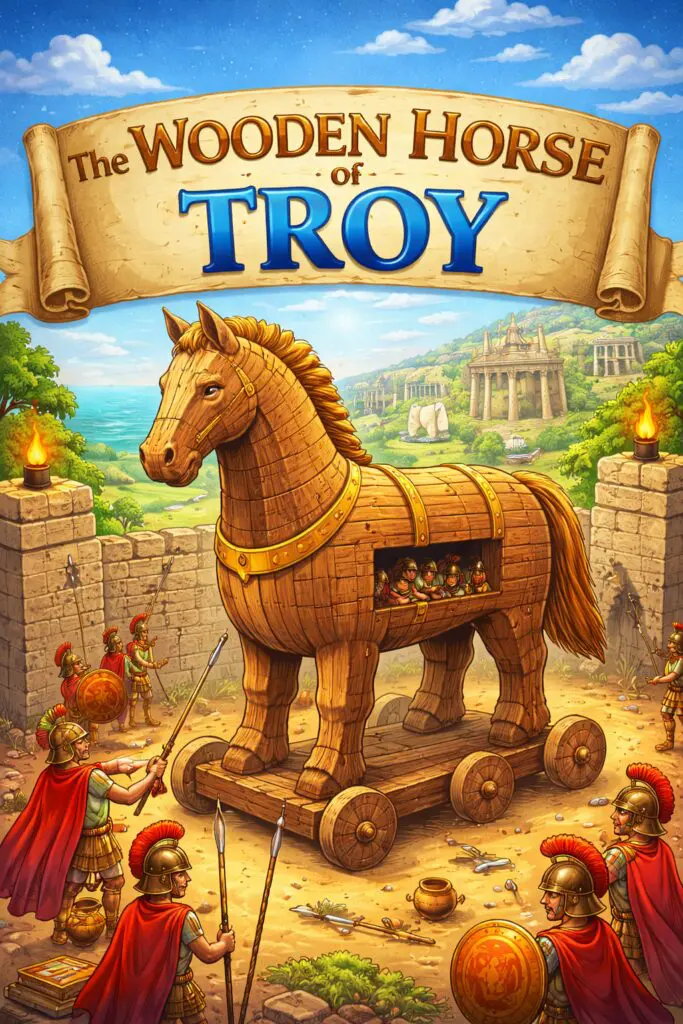
The Trojan War is one of the most famous stories from Ancient Greece. According to Greek mythology, the war began when Paris, a prince of Troy, took Helen, the wife of the Greek king Menelaus. The Greek city-states joined together and sailed across the sea to attack the city of Troy. After a long siege said to have lasted ten years, the Greeks finally captured the city using the clever trick of the Trojan Horse, a huge wooden horse filled with hidden soldiers. Although parts of the story are mythical, archaeologists believe that a real city called Troy existed, and the legend has fascinated people for thousands of years through epic tales such as Homer’s Iliad.
⭐ Fun Facts About Ancient Greece
🏛️ Ancient Greece was made up of hundreds of independent city-states, not one united country.
🏆 The first Olympic Games were held in 776 BC at Olympia and inspired the modern Olympics.
🫒 Winners of the Ancient Olympic Games received an olive wreath, not a gold medal.
🗳️ Ancient Athens developed one of the world’s earliest forms of democracy, allowing eligible citizens to vote on important decisions.
⚔️ Spartan boys began military training from around the age of seven to become skilled soldiers.
🐴 According to legend, the Greeks captured the city of Troy using the famous Trojan Horse.
🎭 The Ancient Greeks invented theatre, and many of today’s plays and dramas are based on Greek storytelling.
📚 Great thinkers such as Socrates, Plato and Aristotle helped shape philosophy, science and education.
🌊 The Ancient Greeks were skilled sailors and traders who travelled across the Mediterranean Sea, spreading their ideas and culture.
🏺 Many beautiful Greek temples, statues and buildings can still be seen today, showing the remarkable skill of Ancient Greek architects and artists.
💬 Discussion Questions
Why was Ancient Greece made up of many independent city-states instead of one united country?
How were Athens and Sparta different from one another?
Why do you think democracy first developed in Athens?
What can the Olympic Games tell us about Ancient Greek culture and values?
Why were trade and the sea so important to the Ancient Greeks?
How did Greek gods and myths help people explain the world around them?
Which Ancient Greek invention or idea do you think has had the greatest impact on the modern world? Why?
What qualities do you think made a successful Greek soldier or leader?
Why do historians still study Ancient Greece more than 2,000 years later?
If you could travel back to Ancient Greece for one day, where would you go and what would you like to see or learn about?
❤️ Why Learn About Ancient Greece?
Learning about Ancient Greece helps children understand one of the world’s most influential civilisations and discover how its ideas continue to shape modern life. Pupils explore the origins of democracy, the Olympic Games, theatre, philosophy and many advances in science, mathematics and architecture. They also learn about famous city-states such as Athens and Sparta, Greek mythology and the achievements of great thinkers like Socrates, Plato and Aristotle. Studying Ancient Greece encourages children to think critically, compare life in the past with today and appreciate the lasting impact this remarkable civilisation has had on the world.
📜 Ancient Greece Timeline
c. 3000 BC
↓
Early Greek civilisation develops
↓
c. 776 BC
First Olympic Games held at Olympia
↓
c. 508 BC
Democracy begins in Athens
↓
490–479 BC
Persian Wars
↓
431–404 BC
Peloponnesian War
↓
356 BC
Alexander the Great is born
↓
336–323 BC
Alexander builds one of the largest empires in history
↓
146 BC
Greece becomes part of the Roman Republic
Related Resources