Sub-Total: £0.00
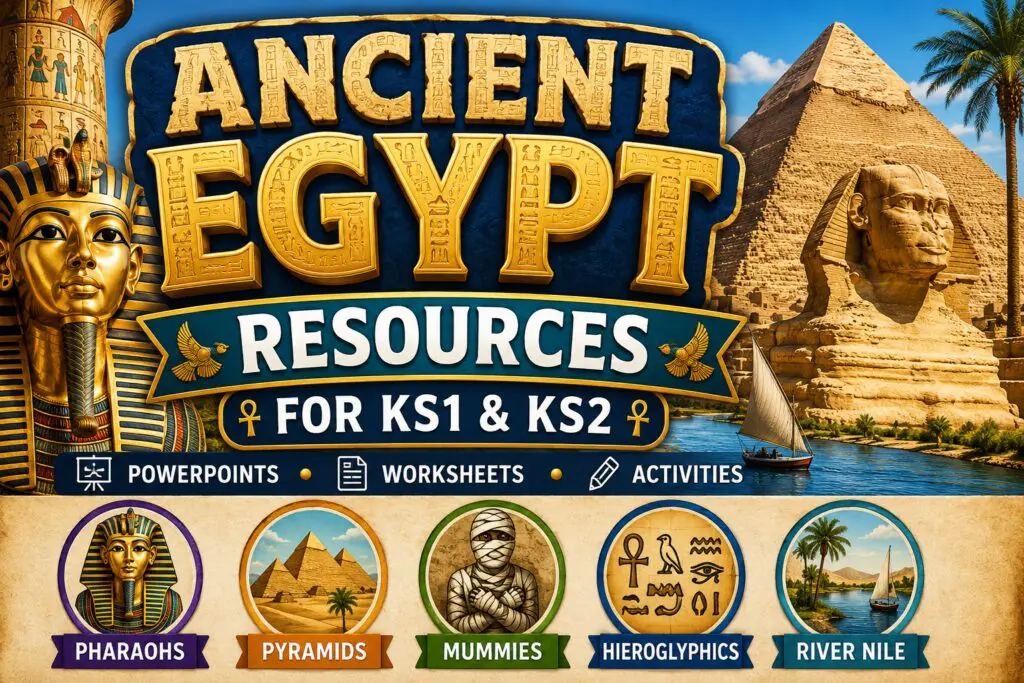
Ancient Egypt Resources for KS1 & KS2 -PowerPoints, Worksheets & Activities

Featured Resources
👑 Who Were the Ancient Egyptians?
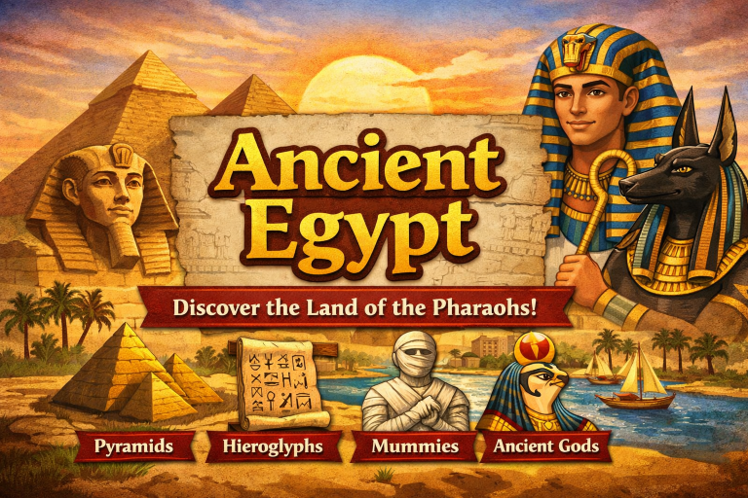
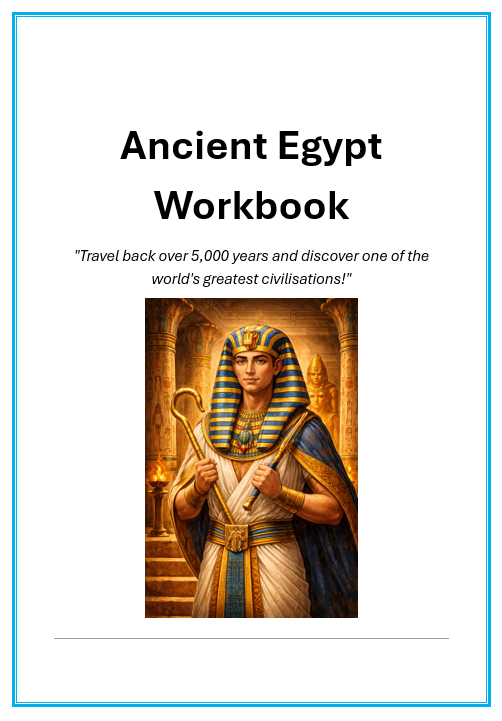
The Ancient Egyptians were one of the world’s greatest civilisations, living along the banks of the River Nile in north-east Africa over 5,000 years ago. They built magnificent pyramids and temples, developed a system of writing called hieroglyphics, and made important advances in farming, mathematics and medicine. Ruled by powerful pharaohs, the Ancient Egyptians created a rich culture that has fascinated people for thousands of years and continues to be studied today.
🌍 Where Was Ancient Egypt?
Ancient Egypt was located in north-east Africa, along the banks of the River Nile, one of the longest rivers in the world. The fertile land beside the river provided fresh water and rich soil for growing crops, while the surrounding deserts helped protect Egypt from invading armies. Ancient Egypt stretched from the Mediterranean Sea in the north to Nubia in the south, making the River Nile the heart of one of history’s greatest civilisations.
🌊 The River Nile
The River Nile was essential to life in Ancient Egypt. Each year, the river flooded and left behind rich, fertile soil that helped farmers grow crops such as wheat, barley and flax. The Nile also provided fresh water, fish and reeds, and it acted like a highway for travelling and trading. Because so many people depended on it, the Ancient Egyptians often described the Nile as the source of life.
🔺 The Pyramids
The pyramids are some of the most famous buildings ever created. They were built as magnificent tombs for the pharaohs, where they were buried along with treasures and items they believed would be needed in the afterlife. The largest, the Great Pyramid of Giza, was built over 4,500 years ago and remains one of the Seven Wonders of the Ancient World. Today, the pyramids continue to amaze people with their size, engineering and historical importance.
👑 Pharaohs
The pharaohs were the rulers of Ancient Egypt and were considered both kings and religious leaders. The Ancient Egyptians believed that pharaohs had been chosen by the gods to lead and protect the country. They made important decisions, commanded armies, oversaw the building of temples and pyramids, and ensured that laws were followed. Famous pharaohs, such as Tutankhamun, Hatshepsut and Ramesses II, are still remembered today for their achievements and lasting impact on Ancient Egyptian history.
🧻 Mummies and Mummification
The Ancient Egyptians believed that life continued after death, so they carefully preserved the bodies of important people through a process called mummification. During this process, the body was dried, wrapped in strips of linen and placed inside a decorated coffin or sarcophagus. Food, clothing, jewellery and other treasured belongings were often buried alongside the mummy because they were believed to be needed in the afterlife. Many mummies have survived for thousands of years, helping archaeologists learn more about Ancient Egyptian life and beliefs.
✍️ Hieroglyphics
Hieroglyphics were the writing system used by the Ancient Egyptians. Instead of using an alphabet like we do today, they used hundreds of symbols and pictures to represent words, sounds and ideas. Hieroglyphics were carved into the walls of temples and tombs or written on a special paper called papyrus. They were mainly used by trained scribes to record important events, religious beliefs, laws and everyday life, helping preserve Ancient Egyptian history for thousands of years.
🛕 Egyptian Gods and Beliefs
The Ancient Egyptians believed in many different gods and goddesses who they thought controlled nature and protected their people. Some of the best-known gods included Ra, the sun god, Osiris, the god of the afterlife, Isis, the goddess of magic and motherhood, and Anubis, the god associated with mummification. The Ancient Egyptians worshipped their gods in magnificent temples and believed that making offerings and saying prayers would bring good fortune and protection. Their strong belief in the afterlife influenced many parts of everyday life, including the building of tombs and the practice of mummification.
🏠 Everyday Life in Ancient Egypt
Most Ancient Egyptians were farmers who lived in small villages near the River Nile. They grew crops, cared for animals and made everyday items such as pottery, baskets and clothing. Children helped their families from a young age, although some also attended school to become scribes. Families enjoyed music, games and festivals, while homes were usually built from sun-dried mud bricks to keep cool in the hot climate. Although life could be hard, the River Nile provided the food and water that helped Ancient Egyptian communities thrive for thousands of years.
🌾 Farming and Food
Farming was the most important job in Ancient Egypt because it provided food for the whole country. Each year, the River Nile flooded, leaving behind rich, fertile soil where farmers grew crops such as wheat, barley, vegetables and flax. They also kept animals including cattle, sheep, goats and chickens. Bread and beer were everyday foods, while fruits, vegetables, fish and dates were commonly eaten. Wealthier Egyptians enjoyed a wider variety of foods, including meat, honey and fine pastries. Successful harvests were essential for keeping Ancient Egypt prosperous and its people well fed.
⭐ Fun Ancient Egypt Facts
🏺 The Great Pyramid of Giza is the only one of the Seven Wonders of the Ancient World that still exists today.
🐈 Cats were considered sacred animals, and harming one was a very serious crime.
👑 Some pharaohs ruled for over 60 years, including the famous Ramesses II.
✍️ Ancient Egyptian scribes spent many years learning to read and write hieroglyphics.
📜 The Ancient Egyptians invented papyrus, one of the world’s first writing materials, made from reeds growing along the River Nile.
🧻 Mummification could take around 70 days to complete.
🌾 The River Nile flooded every year, leaving behind fertile soil that helped farmers grow healthy crops.
🐊 Crocodiles lived in the River Nile and were both feared and respected by the Ancient Egyptians.
💄 Both men and women wore eye makeup, believing it protected their eyes from the bright sun as well as evil spirits.
⏳ Ancient Egyptian civilisation lasted for over 3,000 years, making it one of the longest-lasting civilisations in history.
💬 Discussion Questions
Why do you think the River Nile was so important to the Ancient Egyptians?
Why did the Ancient Egyptians spend so much time building pyramids?
What can the pyramids tell us about Ancient Egyptian civilisation?
Why did the Ancient Egyptians believe mummification was important?
How are hieroglyphics different from the writing systems we use today?
What qualities do you think made a good pharaoh?
Why did the Ancient Egyptians worship so many different gods and goddesses?
How do you think everyday life in Ancient Egypt was different from life today?
Which Ancient Egyptian invention or achievement do you think was the most important? Why?
If you could visit Ancient Egypt for one day, what would you most like to see or learn about?
❤️ Why Learn About Ancient Egypt?
Learning about Ancient Egypt helps children discover one of the world’s most fascinating civilisations and understand how it has shaped the modern world. Pupils explore remarkable achievements in engineering, writing, mathematics, medicine and farming while learning about famous pharaohs, pyramids, mummies and hieroglyphics. Studying Ancient Egypt also develops historical enquiry skills, encouraging children to investigate evidence, compare life in the past with today and understand how beliefs and cultures have changed over thousands of years. It is a topic full of mystery, discovery and incredible achievements that inspires curiosity and a love of history.
📜 Ancient Egypt Timeline
Follow the key events that shaped one of the world’s greatest civilisations.
c. 3100 BC
↓
King Menes unites Egypt
↓
Great Pyramid of Giza
↓
Tutankhamun becomes Pharaoh
↓
Ramesses II rules Egypt
↓
30 BC
Cleopatra VII dies
↓
Ancient Egypt becomes part of the Roman Empire
Related Resources