Sub-Total: £0.00
Rivers Resources for KS1 & KS2 | PowerPoints, Worksheets & Activities

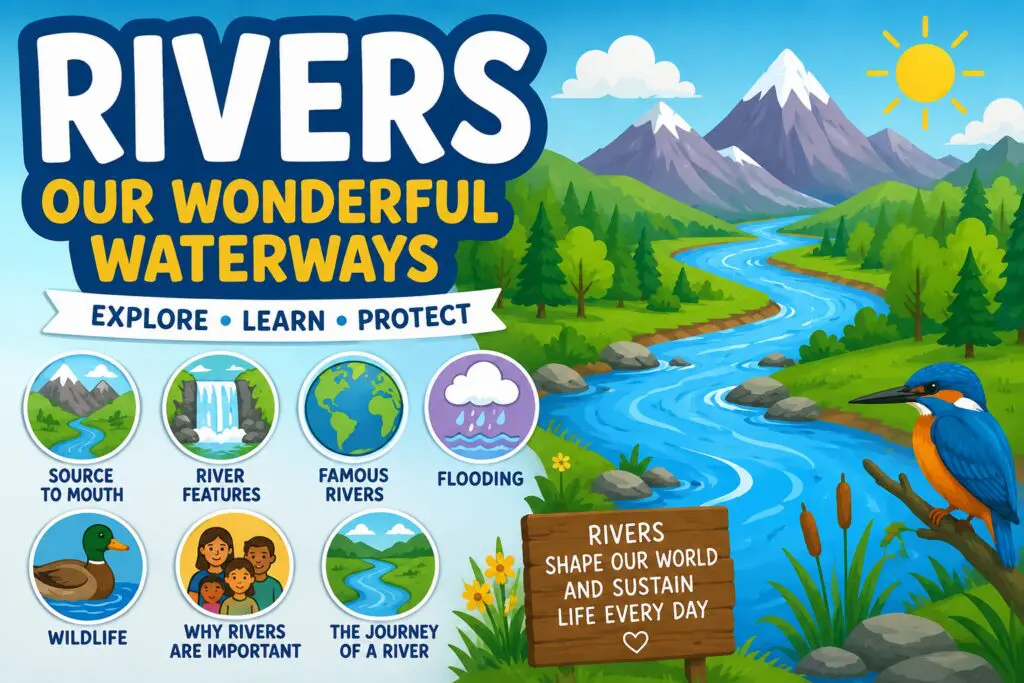
Teach everything children need to know about rivers with engaging PowerPoint lessons, printable worksheets, classroom activities and free resources designed for KS1 and KS2.
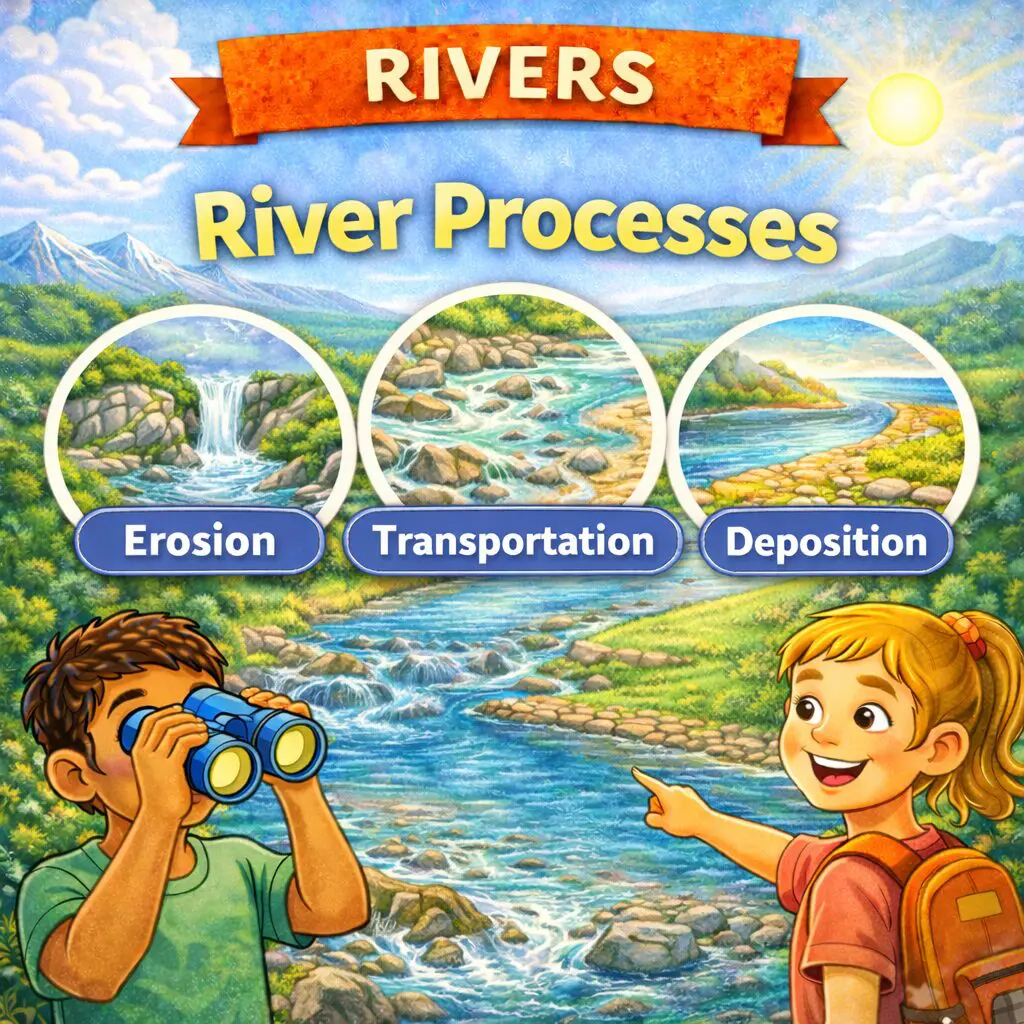
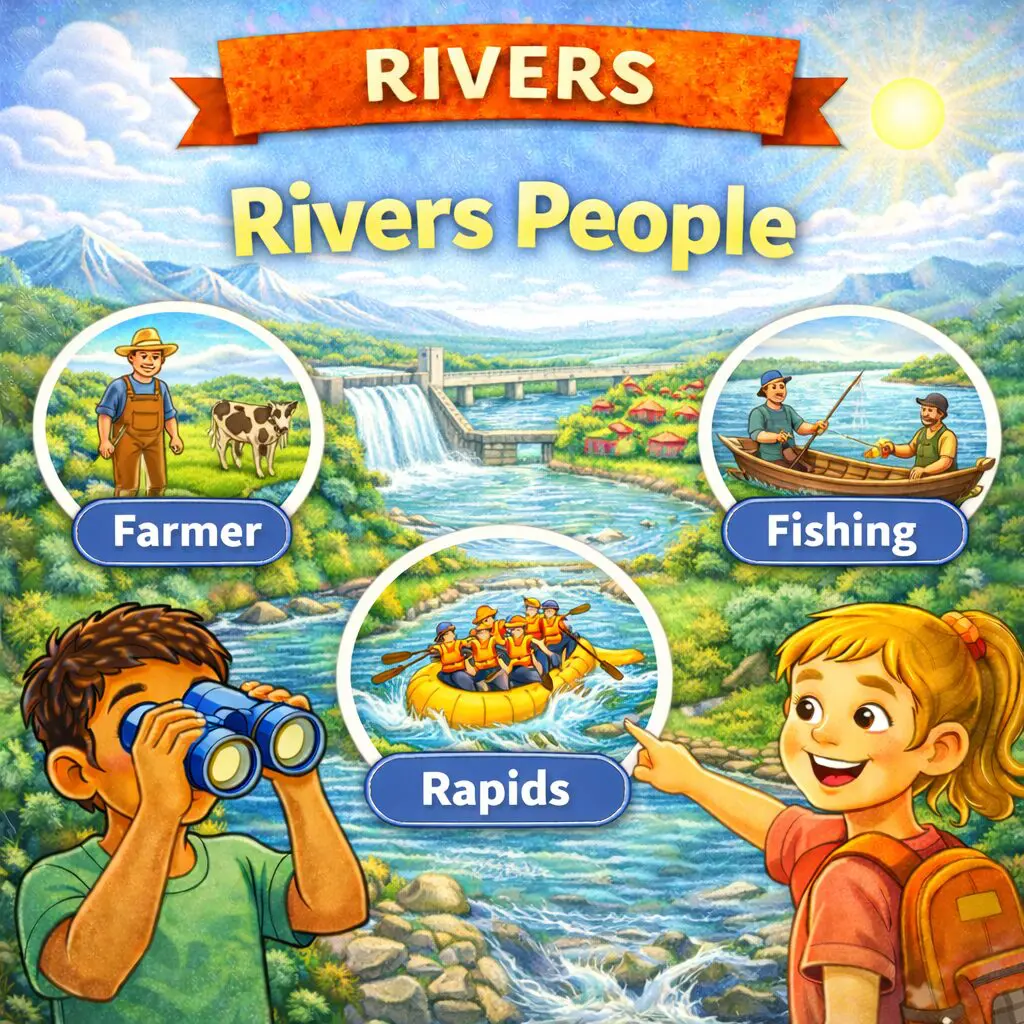
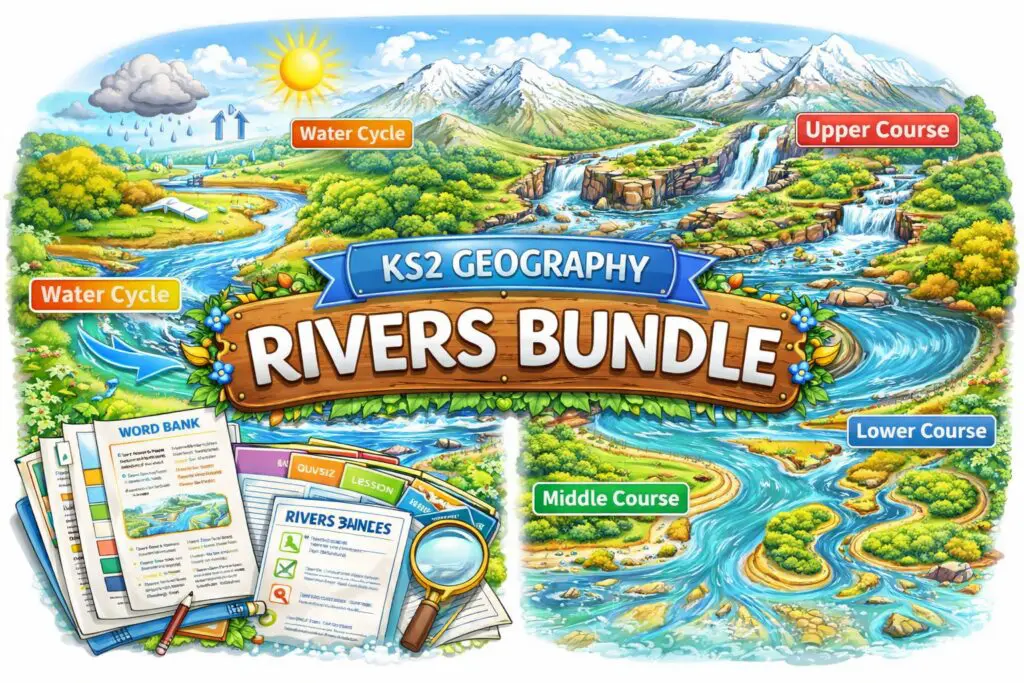
🌊 What Is a River?
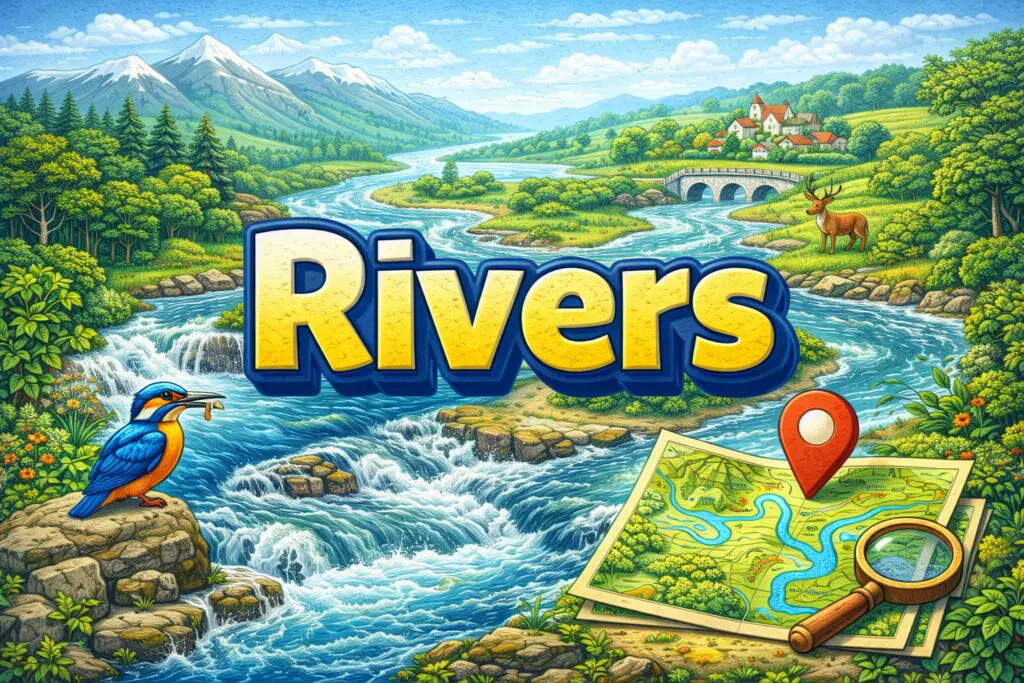
A river is a natural stream of flowing freshwater that travels across the land from its source to its mouth, where it joins another river, a lake or the sea. As rivers flow, they shape the landscape by carving valleys, transporting rocks and soil, and providing habitats for plants and animals. Rivers are also an important source of fresh water and have supported people, wildlife and farming for thousands of years.
💧 The Water Cycle
The water cycle is the continuous journey that water takes around the Earth. The Sun heats water in rivers, lakes and oceans, causing it to evaporate into the air. As the water vapour cools, it condenses to form clouds before falling back to the ground as precipitation, such as rain or snow. This water then collects in rivers, lakes and oceans, where the cycle begins again. The water cycle helps keep rivers flowing and provides fresh water for people, plants and animals.
🏔️ Source to Mouth
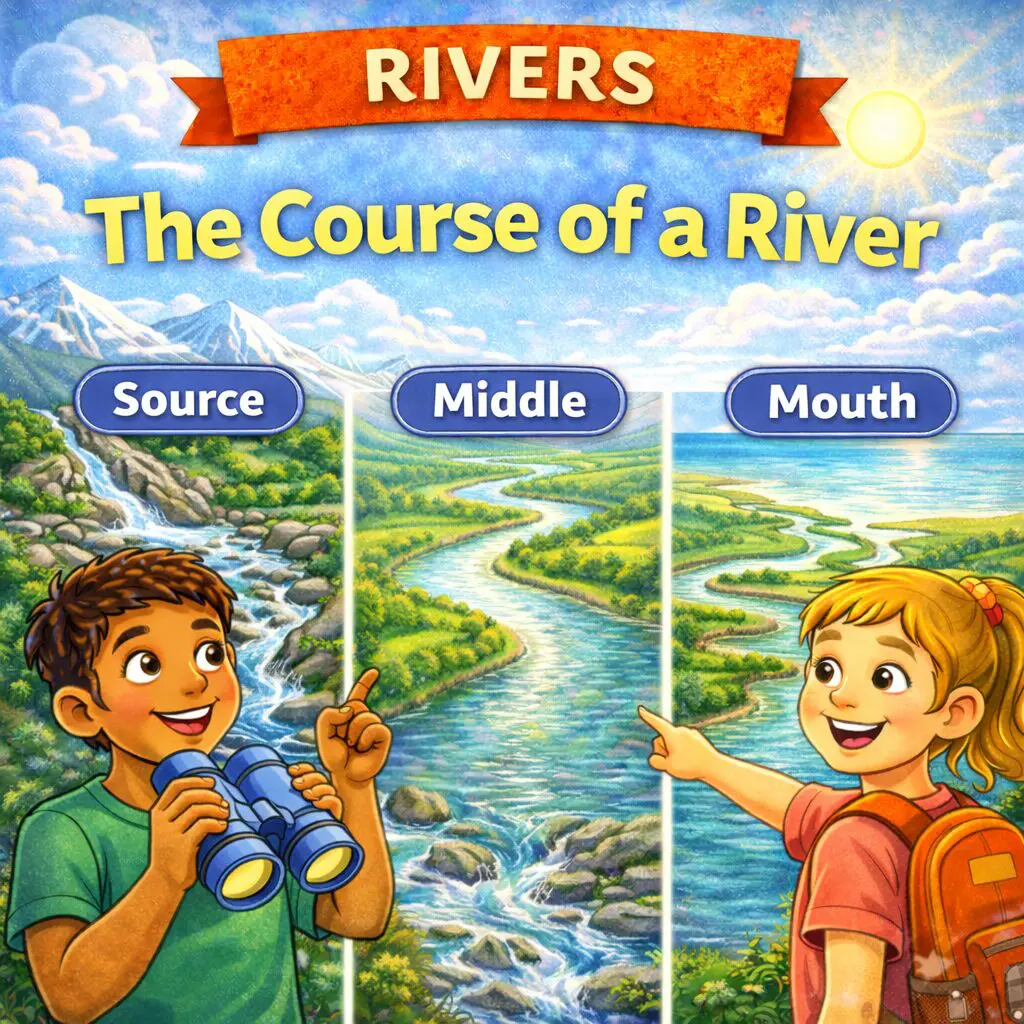
Every river begins at its source, which is often found high in the hills or mountains where rainwater or melting snow collects. As the river flows downhill, it grows larger as smaller streams, called tributaries, join it. Finally, the river reaches its mouth, where it flows into another river, a lake or the sea. This journey from source to mouth shapes the landscape and creates many different river features along the way.
🗺️ River Features
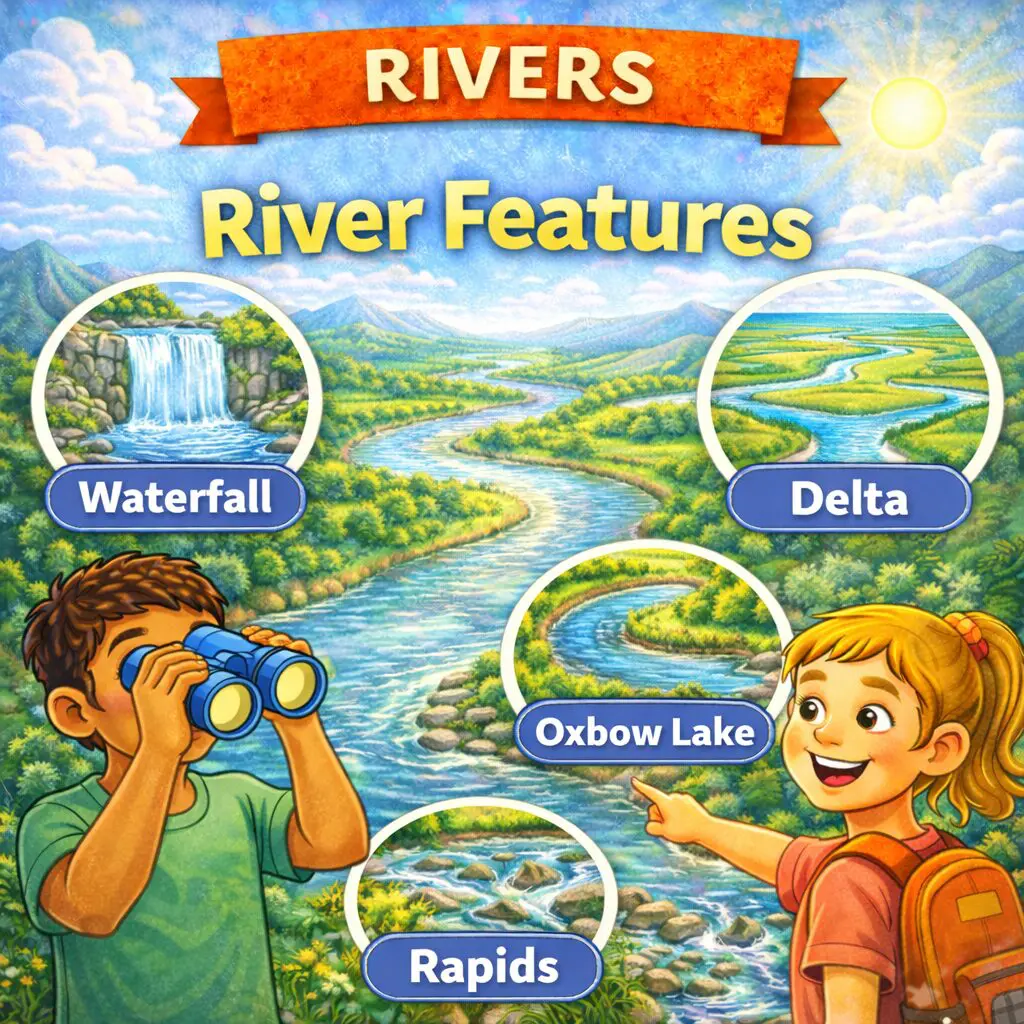
As rivers flow from their source to their mouth, they create many different landforms called river features. These include waterfalls, meanders, oxbow lakes, floodplains, estuaries and deltas. Each feature is formed by the movement of water, which erodes, transports and deposits rocks and soil. Learning about river features helps children understand how rivers shape the landscape over time.
🌍 Famous Rivers
There are many famous rivers around the world, each with its own unique features and importance. The River Nile in Africa is one of the world’s longest rivers, while the Amazon River in South America carries more water than any other river. Closer to home, the River Thames flows through London, and the River Shannon is the longest river in Ireland. Famous rivers provide fresh water, support wildlife, help people travel and have played an important role throughout history.
- River Nile
- Amazon River
- River Thames
- River Shannon
- River Murray
🌧️ Flooding
Flooding happens when a river cannot hold all of its water and overflows onto the surrounding land. This can be caused by heavy rainfall, melting snow or storms. Floods can damage homes, roads and farmland, but they can also leave behind rich soil that helps plants grow. People build flood defences, such as walls and barriers, to help protect communities from flooding.
🌪️ Extreme Weather
Extreme weather is weather that is much stronger or more dangerous than usual. It includes thunderstorms, hurricanes, tornadoes, blizzards, heatwaves and floods. Extreme weather can damage homes, roads and trees, and may sometimes put people and animals at risk. Weather forecasts and warning systems help communities prepare for extreme weather and stay safe.
🌡️ Weather Instruments
Meteorologists use weather instruments to measure and record different types of weather. A thermometer measures temperature, a rain gauge collects and measures rainfall, an anemometer measures wind speed, and a wind vane shows the direction the wind is blowing. These instruments help scientists make accurate weather forecasts and learn more about the changing weather.
🦆 Wildlife
Rivers are home to a wide variety of plants and animals. Fish, such as salmon and trout, live in the water, while ducks, kingfishers and herons can often be seen along the riverbanks. Otters, frogs and insects also depend on rivers for food and shelter. Healthy rivers provide important habitats for wildlife and help support many different ecosystems, making them an essential part of the natural world.
🚣 Why Rivers Are Important
Rivers are important because they provide fresh water for people, animals and plants. They help farmers grow crops, provide habitats for wildlife and have been used for travel and trade for thousands of years. Rivers can also be used to generate electricity and are popular places for fishing, boating and other outdoor activities. Protecting our rivers helps keep the environment healthy for future generations.
⭐ Fun River Facts
🌊 The Nile is one of the world’s longest rivers.
🐟 Rivers provide homes for thousands of animals.
🛶 People have travelled on rivers for thousands of years.
🌍 Every river begins somewhere called its source.
💧 Rivers eventually flow into another river, a lake or the sea.
💬 Discussion Questions
- Why do you think people built towns beside rivers?
- Why are rivers important for wildlife?
- How would life change if rivers dried up?
- Which river would you most like to visit?
- How can we protect rivers from pollution?
🌍 Why Learn About Rivers?
Learning about rivers helps children understand how water shapes our planet and supports life. Rivers provide fresh water for people, animals and plants, help farmers grow food and create habitats for many living things. By studying rivers, children discover how landscapes change over time, why flooding happens and why protecting our waterways is so important for the future.
The Journey of a River
Every river begins its journey at a source, usually in the hills or mountains where rainwater or melting snow collects. As it flows downhill, the river grows larger as tributaries join it. Along the way, it creates features such as waterfalls, meanders and floodplains before finally reaching its mouth, where it flows into another river, a lake or the sea. This journey shapes the landscape and provides water, food and habitats for many living things.
💧 Source
⬇
🏔️ Upper Course
⬇
🌳 Middle Course
⬇
🌾 Lower Course
⬇
🌊 Mouth / Estuary
Related Resources