Sub-Total: £0.00
The Workers in the Vineyard Parable PowerPoint
£3.50
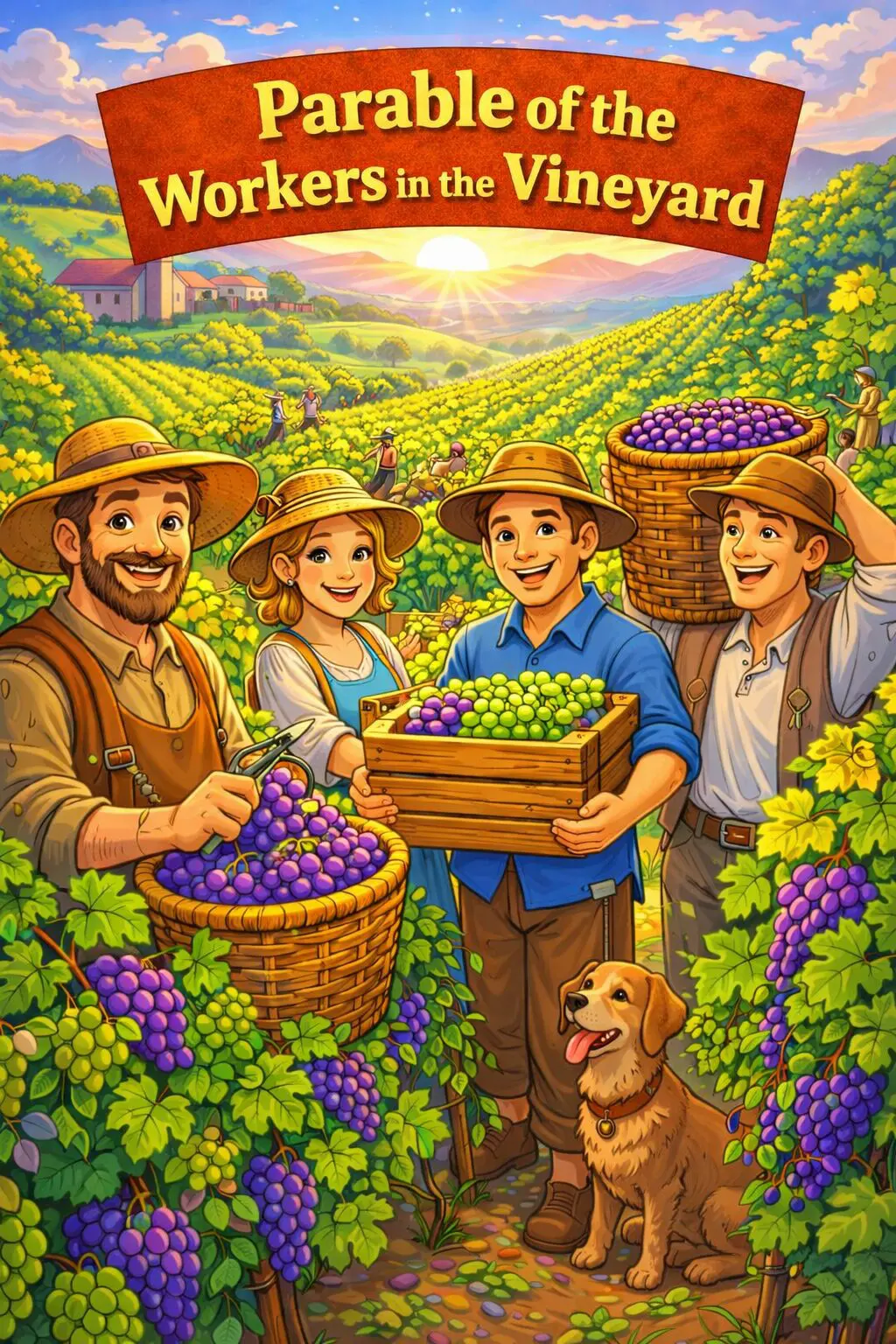
A clear and engaging KS1 & KS2 RE lesson (18 slides) on The Parable of the Workers in the Vineyard. This structured PowerPoint explores fairness, generosity and God’s grace through discussion, reflection and assessment activities. No preparation needed.
Description
The Parable of the Workers in the Vineyard
KS1 & KS2 Religious Education Lesson
Teach pupils about fairness, generosity and God’s grace with this structured and engaging PowerPoint lesson based on The Parable of the Workers in the Vineyard.
This clear, age-appropriate lesson explores one of Jesus’ powerful parables in a way children can understand and relate to. Through storytelling, discussion and reflection, pupils learn that God’s love is a gift given freely to everyone.
This lesson is part of our Religion resources. Explore our full range here:
Religion Lessons KS1 & KS2 | Primary RE PowerPoint Resources
What’s Included:
- Fully structured PowerPoint lesson
- Clear explanation of what a parable is
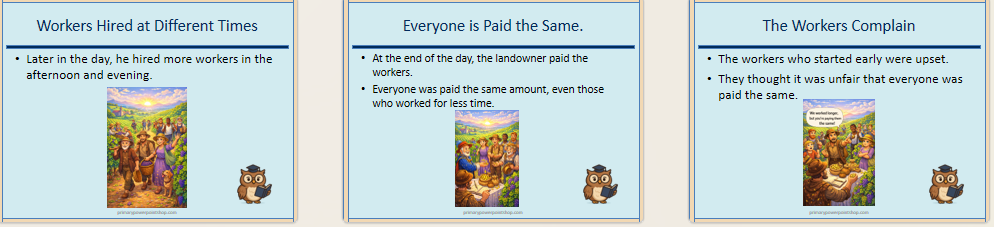
- Retelling of The Workers in the Vineyard
- Discussion slides on fairness and generosity
- Thought-provoking reflection questions
- Independent written/drawing task
- Built-in quiz with answers
- Recap and plenary slide
Learning Outcomes:
Pupils will:
- Understand what a parable is
- Retell the story of the Workers in the Vineyard
- Explore themes of fairness and generosity
- Reflect on God’s love as a gift
- Consider how to show kindness even when things feel unfair
Perfect For:
- KS1 & KS2 Religious Education
- Catholic schools and Christian ethos schools
- Parables topic
- God’s Kingdom topic
- Fairness and justice discussions
- Assembly themes
- Cover lessons (ready-to-teach)
Why Teachers Love It:
✔ Clear structure from starter to plenary
✔ Age-appropriate explanation of grace
✔ Encourages thoughtful classroom discussion
✔ No additional planning required
✔ Ideal for Upper KS2 deeper reflection
✅ What This Lesson Teaches
This parable challenges pupils to think beyond human ideas of fairness. The landowner represents God, who gives generously and lovingly — not based on what we earn, but through grace.
Children are encouraged to explore:
- Is it always about fairness?
- What does generosity look like?
- How can we treat others kindly even when something feels unfair?
-
🎓Save hours of planning with our ready-made PowerPoint lessons
- Parables of Jesus KS2 – 9 Complete RE Lessons | PowerPoint Unit
- The Prodigal Son KS1 & KS2 | Parable of Forgiveness RE Lesson
- The Parable of the Sower KS1 & KS2 | Jesus’ Parables RE Lesson
- The Parable of the Two Sons KS1 & KS2 | RE Lesson
- The Parable of the Two Sons KS1 & KS2 | RE Lesson
- The Parable of the Wedding Banquet KS1 KS2 RE Lesson
- The Good Samaritan KS1 & KS2 | RE Parable Lesson
- Parable of the Lost Sheep KS1 KS2 | RE Lesson PowerPoint
- Parable of the Mustard Seed KS1 KS2 | RE Lesson PowerPoint
These engaging lessons are perfect for KS1 & KS2 classrooms and require zero preparation.
Browse all of our FREE and premium teaching resources here for KS1 & KS2 .
Related products
-

Happy Easter Colouring Sheet | Free Printable Easter Activity for Kids
£0.00 Add to basket -
Easter Card Colouring Template | Free Printable Card for Kids
£0.00 Add to basket -
The Parable of the Mustard Seed KS1 & Ks2 PowerPoint RE
£3.50 Add to basket -
Easter Story Worksheet KS2 | Holy Week Comprehension & Activities (FREE Download)
£0.00 Add to basket